

A new Indian-made PlayStation game arrives this week, and it has a rather different idea of what makes a difficult platformer. In SURI: The Seventh Note, the music is not there to keep you company. It tells you when to move. Miss the rhythm and an otherwise simple jump can become a problem.
Bengaluru-based Tathvamasi Studios launches the game on October 30, 2026, for PS5 and Windows PC through Steam. It is the studio’s debut commercial game and part of PlayStation’s India Hero Project. With the release approaching, the useful questions are what it costs in India, whether there is a demo, and what players actually do once they start.
SURI: The Seventh Note price in India and release date
The India PlayStation Store lists the PS5 Standard Edition at ₹1,664 and the Digital Deluxe Edition at ₹2,081. At the time of this October 29 check, eligible PlayStation Plus members were being shown a limited 20% offer: ₹1,331 for Standard and ₹1,664 for Digital Deluxe. The listing says the offer ends at 6:30 PM UTC on October 29, which is midnight in India at the start of October 30. Treat those discounted amounts as a time-limited store offer, not permanent launch prices.
The Deluxe Edition includes the base game, the exclusive Chandini skin, the Trials of Yama DLC and three days of early access. The developer says the cosmetic and DLC are not planned as separate purchases, so they are the real differences after the early-access window has passed. Players who only want the main adventure do not need Deluxe.
On Steam, the official page lists October 30 for Windows PC and offers a downloadable demo. It does not provide a verified India-specific selling price in the accessible listing, so a converted US-dollar price should not be treated as the rupee price.
What kind of game is SURI?
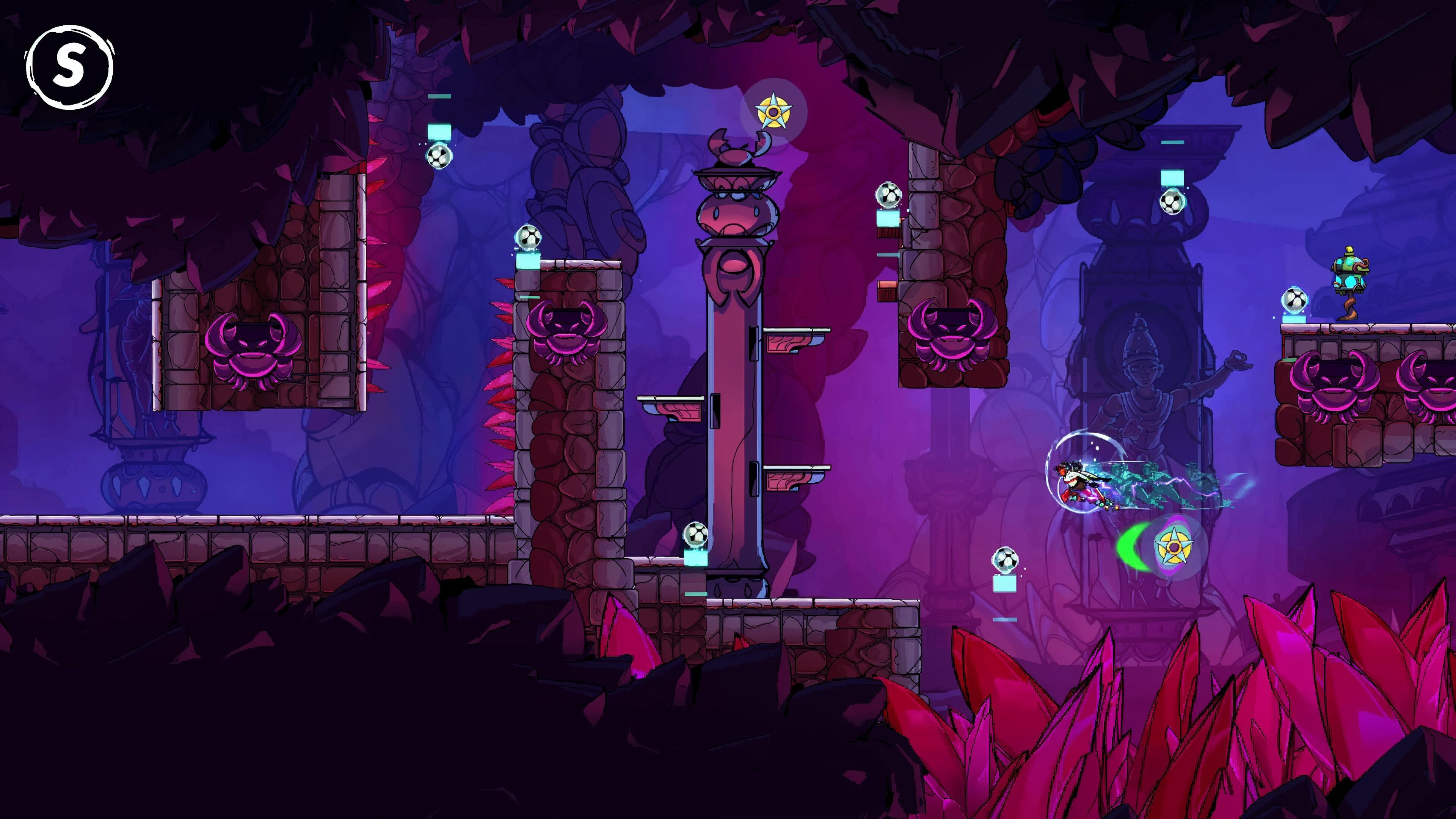
It is a single-player 2D rhythm-action platformer. You play Ajira, a young girl looking for a fruit that could save her mother. Her journey takes her across an island whose natural rhythm has been disrupted. Enemies, platforms, moving obstacles and chase sequences are built around the same musical timing system.
This is not a conventional music game that asks you to press buttons on falling notes. You still explore levels, jump gaps, perform dashes and work out how to cross dangerous spaces. The difference is that your actions have to make sense against the beat. That gives SURI a recognizable hook without turning the adventure into a rhythm-game menu.
Tathvamasi says it settled on roughly 480 milliseconds between the game’s major beats. That was a design decision made to leave enough time for a human response while keeping the movement sharp. Whether every level gets that balance right will only become clear after people have played the full game.
Why the music sounds unmistakably Indian
The team drew from several regional traditions instead of treating Indian music as a single sound. Its PlayStation developer note describes using veena-inspired musical textures in the south of the island and Rajasthani influences for desert areas. Around 80% of the music, according to the studio, was recorded using original analogue instruments rather than entirely electronic synthesis.
The soundtrack is not traditional music dropped into a game unchanged. The studio says it reshaped those sounds into a rhythm that works with controller inputs, combining Indian instrumentation with a structure closer to contemporary beat-driven music. That practical compromise may be the most interesting part of the project.

Can you play it before buying?
Yes. The PlayStation Store lists a free SURI demo, and Steam also provides a demo download. It is a sensible place to start because timing-heavy platformers can feel very different in the hands from how they look in a trailer.
The Steam minimum specification lists Windows 10, an Intel Core i5 fifth-generation processor or equivalent, 8GB RAM, a GTX 1650-class GPU, DirectX 11 and 15GB of storage. Recommended graphics move up to an RTX 2060-class card with 16GB RAM. Those are published requirements, not independently benchmarked performance claims.
On PS5, the game is listed for offline single-player play and supports DualSense vibration. Tathvamasi has also talked about its own Rhythm Haptics Engine, which aims to make the controller part of the musical feedback.
A smaller launch with something to prove
SURI does not need to compete with blockbuster open-world games on their terms. Its opportunity lies in doing one specific thing well: turning music and movement into an enjoyable test of timing.
The broader reason to watch it is the developer. Indian studios are often discussed through market-size reports or the success of games published from overseas. Here is an original game, developed in Bengaluru, reaching PlayStation and Steam with its own look and a clear mechanical idea. Its reception will be a more useful measure than any promotional slogan.
The official PlayStation demo trailer above gives a direct look at the platforming before release. Buyers should recheck their storefront after October 30 for the current price, regional unlock time and any changes to the introductory offer.