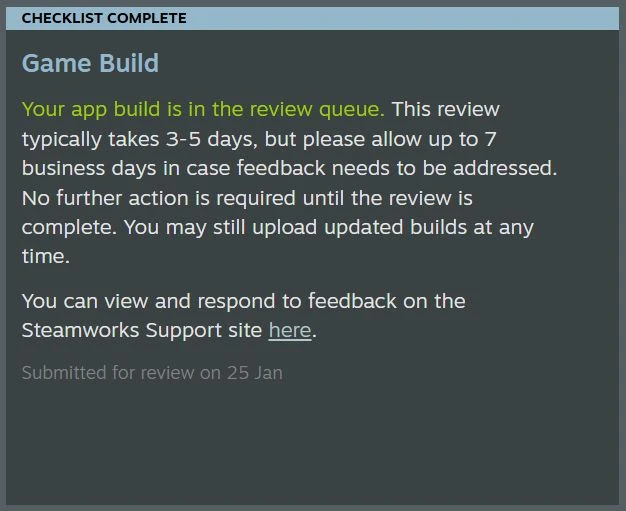
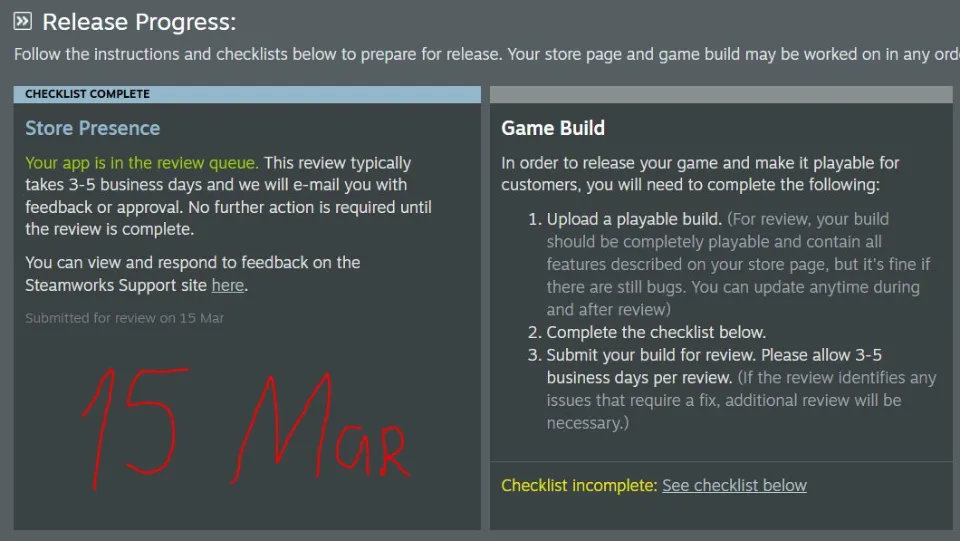
A small studio can finish its game, announce a launch date, complete the Steam store page and still discover that the last obstacle is a queue. Valve says its review process is being affected by a significant increase in game submissions, and developers have reported waiting as long as 12 business days for checks that normally take three to five. For teams with marketing booked, creators lined up and limited cash, that difference can be expensive.
The most important finding is what Valve has actually said about the cause. Some developers suspect the growing number of AI-assisted projects is clogging the platform, and it is a reasonable concern to investigate. But Valve's own explanation highlights the repeated re-review of submissions with avoidable problems. There is not enough public evidence to confidently attribute the entire delay to AI-generated games.
Why the store review happens before launch
Steam does not simply let a developer upload an executable and press publish immediately. The storefront and game build need to pass separate review processes before an app can go live. That includes verifying the product can be launched in the way customers will actually use it and that a store page gives a fair representation of what is being sold.
There are good reasons for those checks. Players should not pay for a game that fails at the launcher or discovers critical installation steps are missing. But a delay that was meant to be predictable becomes painful when every release has a date attached. Small studios typically coordinate press keys, influencer videos, community posts and wishlists around launch week. Missing that window can waste months of preparation.
What Valve is asking developers to do differently
According to reporting on Valve's updated guidance, the company wants developers to run their game through Steam for at least five minutes as part of release preparation. Launching a build directly from a folder is not the same test. It may bypass the Steam integration, installation process or redistributables players encounter after purchase.
The updated checklist also puts emphasis on achievements and required components such as DirectX or Visual C++ redistributables. That sounds mundane beside a game's trailer, but those are precisely the sorts of dependencies that can turn a finished-looking build into a failed review. A reviewer who discovers a missing requirement sends the developer back to fix it, and the title re-enters the review cycle.
Valve says further improvements to the process are in development. The immediate goal is to reduce the number of submissions that have to come through the queue a second or third time. It is the kind of operational change that will not be celebrated by players but could matter enormously to the developers supplying the store.
The AI question requires evidence
Steam has seen tremendous growth in the number of new releases, including very small, experimental and AI-assisted projects. That creates legitimate questions about discoverability and platform moderation. However, it is a mistake to treat every delay as proof that generative AI is the culprit. A manually built game with a broken launcher still consumes reviewer time. A fully compliant small game may be approved quickly regardless of the tools used to create its art.
The important distinction is between correlation and causation. A larger submission pipeline can increase queue lengths, while repeated failures increase the work required for each title. Both can be happening at once. Valve's published explanation gives evidence for the latter factor and acknowledges the former. It does not break down its queue by how much AI was used in every game.
What indie developers should do now
If your release is approaching, build extra time into the schedule instead of treating the normal three-to-five-day window as a guarantee. Submit the store page and playable build as early as platform rules allow. Test the Steam installation path on a clean machine, not only the developer PC where all dependencies may already be installed.
Check that achievements, save systems and launcher behaviour work from the customer's perspective. Verify that screenshots depict the actual product and that the game description does not make promises unsupported by the build. If an approval requires changes, make those changes carefully before resubmitting. Rushing the correction can send the build through the loop again.
Developers should also keep their community informed without turning a review delay into a promise Valve has not made. A clear update explaining that platform approval is pending is more useful than an invented release time. If the launch has to move, say why and reset expectations early.
Why players should care
For consumers, these queues can look like a minor backend detail. The effect is more visible than that. Delays can push indie launches into crowded weeks, disrupt planned discounts and complicate access for creators who wanted to cover a game when it was new. Long-term, a more predictable submission process would be good for the entire PC market.
Valve's proposed fix also points to a broader reality about storefront quality. The problem is not simply having too many games. It is whether the platform has a system that can assess those games efficiently while giving honest projects a fair route to launch. The next test will be whether the review times begin returning toward the old baseline after the checklist changes take effect.