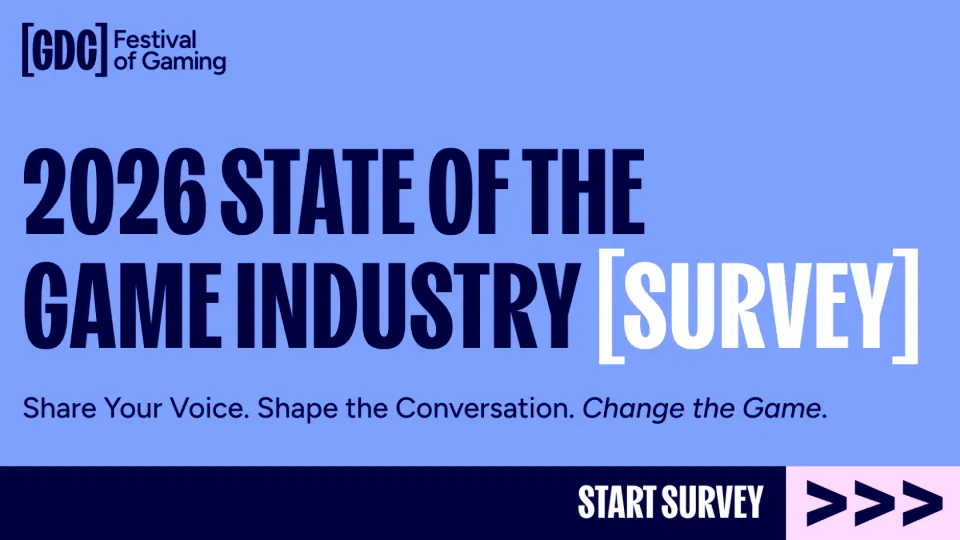
The most revealing number in GDC's latest State of the Game Industry report is not that 40% of surveyed game-industry professionals use generative AI at work. It is that 55% of respondents also believe generative AI is having a negative impact on the industry. Those figures are not necessarily contradictory. A person can use a tool to meet deadlines while still disliking how that technology changes the job, the market or the future of their profession.
The November 2026 report is worth reading because it moves beyond the familiar argument about whether AI is 'good' or 'bad'. It captures how people actually use the technology, how often they use it and where their concerns are concentrated. The adoption share rose from 36% the previous year to 40%. Among people who already use AI, 57% said they use it daily. The picture is of a technology becoming ordinary in some workflows without earning broad industry trust.
What the 40% figure does and does not mean
The survey covers game-industry professionals, not only programmers building gameplay systems. Roles include business operations, services and other specialisations. That distinction matters because headlines sometimes turn a survey of industry professionals into an assertion that 40% of games are made by AI or that 40% of creative assets are generated. Neither claim follows from the data.
GDC's findings suggest that support is stronger for administrative and exploratory tasks such as research, early prototyping, brainstorming and repetitive work. Attitudes are much more sceptical when AI reaches player-facing material or creative production. This is the difference between using a tool to summarise meeting notes and using it to generate a character performance. Both fall under the broad label 'generative AI', but they raise very different questions for developers and players.
Why negative sentiment remains so high
GDC says 55% believe the technology is negatively affecting the industry, almost unchanged from 54% in the previous survey. Thirty-five percent say the impact is mixed and 8% consider it positive. The report also identifies strong opposition among quality assurance and community support roles, where 76% express a negative view.
The reasons are not simply hostility to new tools. Respondents raised concerns about copyright and legal uncertainty, job losses, energy and environmental costs, and erosion of professional skills. If a studio asks workers to use a system to automate part of their work while also reducing staff, it is unsurprising that adoption and anxiety can increase together. A survey can capture that tension; it cannot resolve it.
What game developers are using AI for
The most useful distinction is between assistance and finished work. AI can support research, summaries, draft code and early mock-ups without necessarily replacing the human judgment that decides what belongs in the shipped game. Some teams report real gains from those uses. Player-facing dialogue, art, voice performances and other creative outputs invite a different level of scrutiny because authorship, licensing and quality become central concerns.
There are also important limitations to how we read adoption numbers. The fact that someone tried an AI tool once does not say how much time it saved, whether the output was reliable or whether the team would use it again. Even daily use does not establish how much of a final game was created by a model. Those are different measures, and they should not be collapsed into one dramatic figure.
Layoffs make the question harder
The survey is being released into an industry that has experienced years of workforce instability. That backdrop changes how staff interpret technical promises. A feature presented as making one developer more productive may sound helpful to a small studio and threatening to someone whose employer has already reduced headcount. People are responding not only to software but to their working conditions.
GDC's broader report also touches on platform planning, game engines and education. One revealing education gap is that the use of AI among students does not simply match the permissions their educators give. That suggests adoption is being shaped by real attitudes and incentives, not merely by whether a particular institution says the tools are allowed.
What the numbers mean for players
For players, the sensible lesson is to ask more specific questions than whether a game 'uses AI'. Was a tool involved in debugging or data analysis? Did it generate an image that appears in the final release? Were performers paid and consulted? Did the studio disclose what changed, and does it have rights to the material it used? Those questions are more useful than a single checkbox because the risk and benefit depend on the application.
The report does not tell us that AI is about to replace everyone who makes games. It does tell us that large numbers of people are trying it while a majority remains worried about its effects. That is a complicated reality, and it deserves more careful coverage than either triumphalist predictions or blanket denunciations.