
An open-world game remembers what you did when you were not looking. Open a door, leave the house, walk around the block and return: the door should still be open. A generated video does not need to remember that. A playable world does. That small difference is why Google’s latest AI experiment is impressive and why it is not yet a replacement for the people who make games.
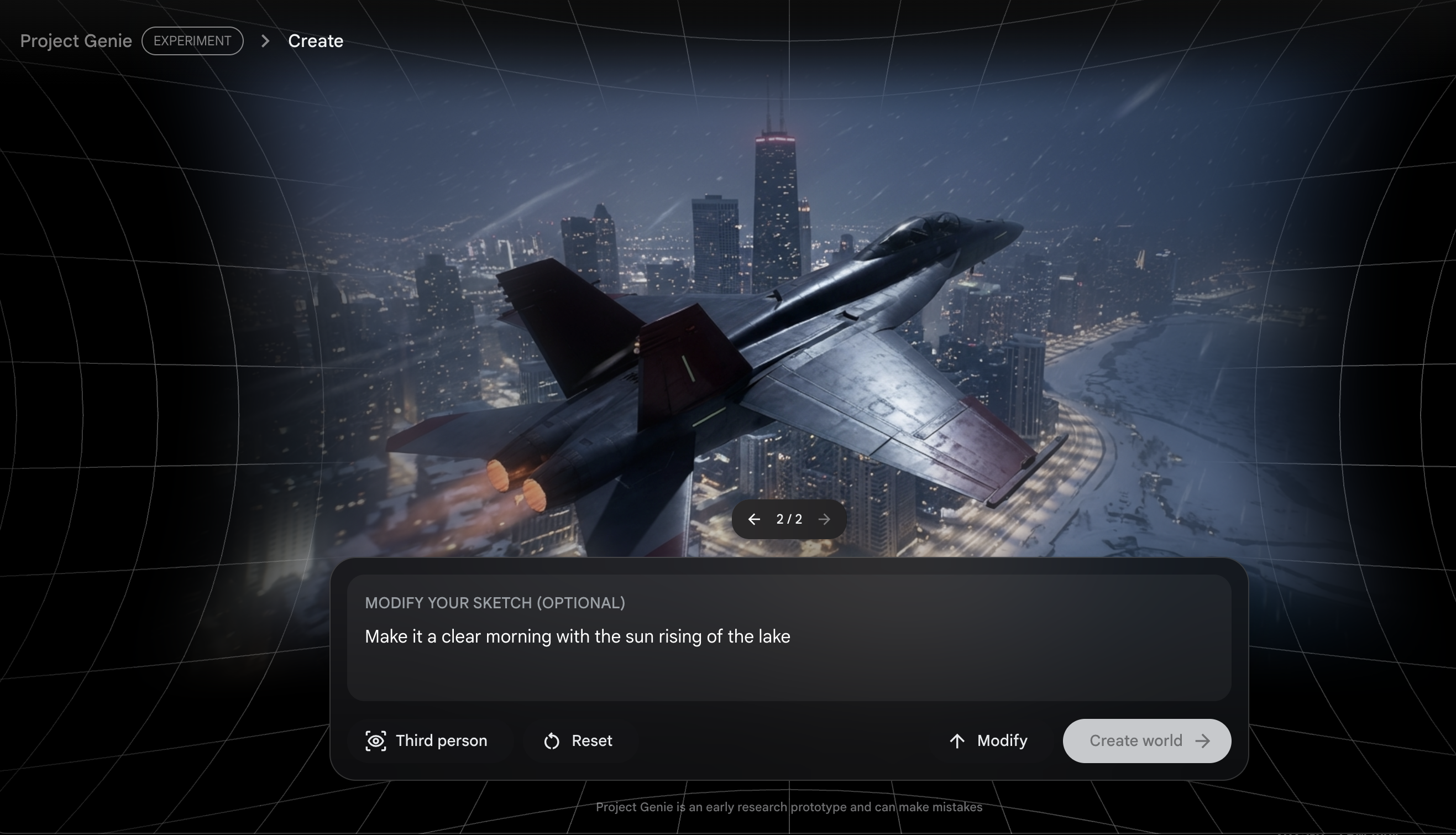
Google DeepMind announced Genie 4 on October 27, 2026. It describes a world model that can generate an interactive environment and its audio together. A user can move through the scene, change the weather, adjust the camera or introduce elements with text prompts while the simulation responds. Google says the system brings together parts of its Gemini model family to improve how the simulated world behaves.
This is a real research advance, but the launch is narrower than some headlines suggest. Genie 4 is available to a limited group of trusted testers, with future access planned through Project Genie for Google AI Ultra subscribers and through early-access developer channels. It is not a free, generally available tool for releasing commercial games.
A game is a memory of consequences
For an interactive world to be convincing, it needs something close to rules. If a character moves behind a wall, the system should know where the character went. If a player knocks a box into a corner, a later camera angle should not reveal the box floating somewhere else. A shooter needs the same enemy to remain the same enemy when it comes back into view. A puzzle needs a solution that still works after a minute of experimentation.
Google’s own documentation identifies exactly these weak points. Visual details and object permanence can drift during longer sessions or after several complicated prompt changes. Spatial accuracy, complex physical interactions, readable text and long-term consistency remain active research problems. The model currently supports minutes of interaction, not an evening spent exploring a world that can remember every decision.
That is not a footnote. It is the difference between being shown a convincing demonstration and being given a game a player could buy. A studio has to build systems that can be tested, replayed, balanced and repaired. Players expect a quest to remain completable after a patch, an inventory to persist between sessions and a level designer’s solution to survive a different route through a room.
Sound changes the experience
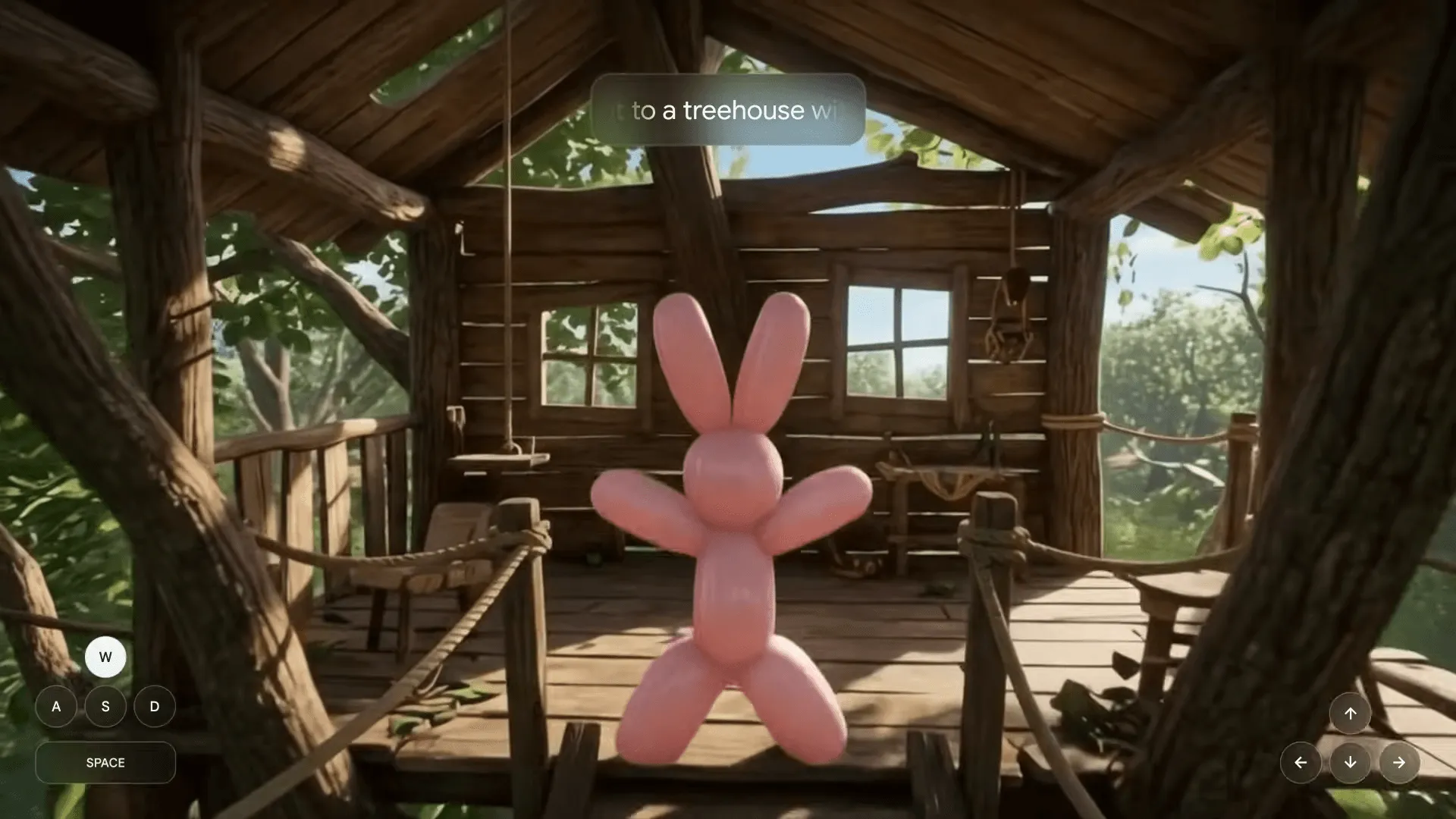
Genie 4’s native audio is a meaningful part of the announcement. Earlier demonstrations of generated environments often looked like moving images with controls attached. Google now describes ambient noise, music and interactive dialogue being created as part of the same simulation.
Sound gives a scene context that visuals alone cannot. A footstep can reveal the size of a room; distant traffic makes a city feel inhabited; a voice that responds to where the player stands makes an interaction feel less like a prerecorded film. But generated audio also needs continuity. It should not change a character’s voice because the camera turned or invent a new soundtrack every time someone walks past the same doorway.
Google acknowledges that real-time audio accuracy remains an issue to solve. That admission is useful. It lets developers imagine a future tool without pretending the current one can handle cinematic mixing, accessible subtitles, localisation, licensing and predictable dialogue out of the box.
Why game developers should pay attention anyway
The most credible near-term uses are not finished 50-hour RPGs. A designer could use a model like Genie to test the mood of an environment, explore how a location might feel under different weather or quickly illustrate a playable idea before the costly stage of building it in an engine. A filmmaker might experiment with virtual blocking; researchers might create variable environments for an agent to navigate.
Those use cases are not trivial. Early prototypes can save people from pursuing the wrong visual direction. They can also mislead teams if a pretty simulation hides flaws in the underlying design. A scene that looks coherent for two minutes does not prove a mechanic will be enjoyable after twenty hours.
The question of ownership is equally important. A production game needs a consistent art direction, assets that can be revised and a pipeline to fix a specific bug. Generating a room is easier than handing a level designer a reliable, editable description of that room and the systems that keep it functioning. The model’s developers have not announced that Genie 4 solves that problem.
What to watch next
DeepMind says its research previews will use SynthID watermarking for generated video and audio. That is one attempt to address provenance as photorealistic simulations become harder to distinguish from recordings. The practical questions still ahead include who can access the model, how much it costs to run and whether its behaviour holds steady across repeated tests.
The headline from October 27 is not that Google can replace a game studio. It is that a player can now steer a generated world with much more immediacy than a static text-to-video prompt allowed. The hardest part of game development comes afterward: deciding what must never change so that the player’s choices can matter.
Genie can imagine a door. A finished game has to remember why you opened it.