

Ask a chatbot to draw a processor and it will happily produce something that looks like a processor. Ask a factory to manufacture that drawing and you may have an expensive problem on your hands. Chip design is full of rules that do not care how convincing an AI answer sounds. A wire has a delay. Heat has to go somewhere. A design that passes one test can fail another, and the cost of discovering a serious error after fabrication is enormous.
Cadence's new Maestro portfolio is aimed at that world, not the everyday chatbot market. Announced on October 26, 2026, the specialised AI models are designed to work with Cadence's established electronic design automation tools and AI Super Agents. The company reports encouraging early performance. Engineers still have good reasons to ask how those results were measured.
What does Maestro do differently?
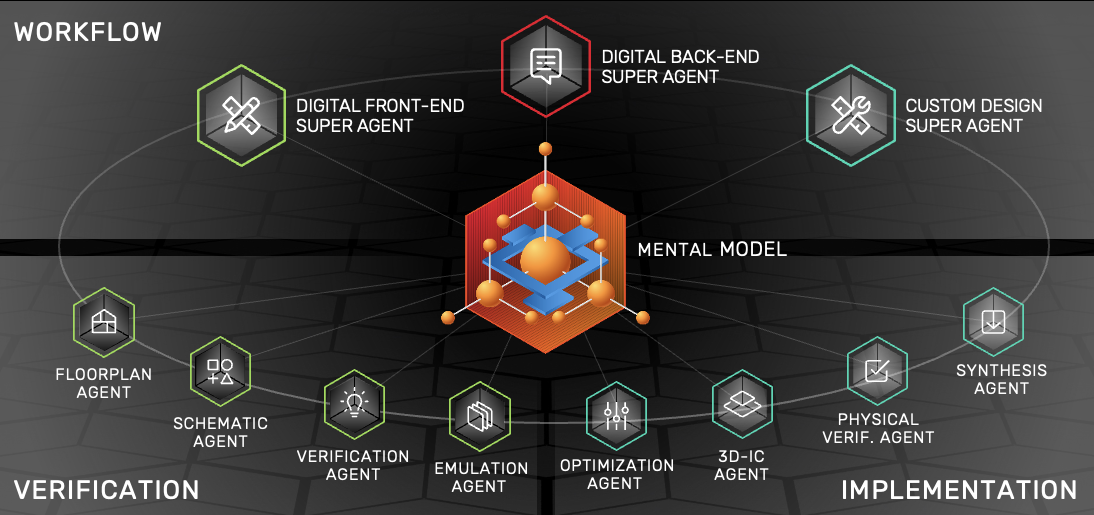
Instead of relying on a general-purpose language model to produce a plausible engineering answer, Maestro is intended to operate inside a toolchain built to check circuit designs. Cadence describes a combination of specialised models, reinforcement learning, verified design tools and agents capable of carrying out parts of the design and debugging process.
Think about the difference between asking an assistant why an application crashes and giving it access to a proper debugger, test suite and version history. In chip design, the stakes are far higher. It matters whether an agent can identify a failing condition, produce a useful change and show that the change survives rigorous verification. A fluent explanation without evidence is not a fix.
Cadence says its initial workflows achieved up to 30% better quality of results and up to five times greater token efficiency against general-purpose foundation models. Those are company-reported results from selected tasks, not independently established improvements for every semiconductor company or design project.
Why faster answers are not the whole target
Design teams often spend enormous effort trying to meet several constraints at once. Reduce power consumption and you might damage timing. Make an area smaller and it may become harder to route interconnections. Fix one verification failure and another may appear. A useful AI system has to understand that the job is to navigate trade-offs, not to produce the shortest possible answer.
This is why the company's integration with existing EDA tools matters more than the headline word 'agentic'. In principle, a model can propose improvements, run checks and revise its plan based on results. In practice, every organisation will want proof that the system is reliable across its own design rules, intellectual-property libraries and manufacturing targets.

The initial 30% and 5x claims also describe different metrics. Better quality of results does not necessarily mean a chip is 30% faster. Token efficiency does not mean a production schedule is five times shorter. Any article that turns those numbers into a universal productivity promise is asking readers to trust marketing instead of engineering.
There is a privacy problem hiding behind the AI excitement
Chip designs are among a technology company's most sensitive assets. They can contain years of research and information about products that have not been announced. Sending that work to an uncontrolled outside service is not a trivial decision, especially for customers dealing with export controls or confidentiality obligations.

Cadence says its system can operate through cloud deployments as well as customer-controlled on-premises environments. That choice is likely to matter as much as model capability to organisations that cannot allow proprietary layouts and design data to circulate freely. It also makes the product very different from an AI feature that any individual can activate with a personal account.
Can developers actually use Maestro today?
Cadence says the first models are being offered to selected early-access customers in the fourth quarter of 2026. That does not amount to a public service that game developers, hobbyists or chip enthusiasts can open in a browser. It is specialised enterprise technology, and the company has not published a universal independent benchmark covering every design workflow.
Maestro is worth following because it puts AI somewhere practical: inside a process where an answer must survive tests. If it improves the speed of verification and cuts repetitive engineering work without hiding failures, the impact could be significant. But silicon is unforgiving. No matter how impressive the model sounds in a launch video, physics gets the final vote.


