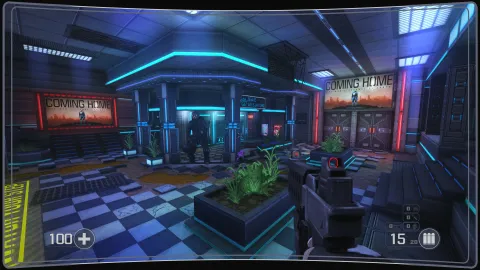
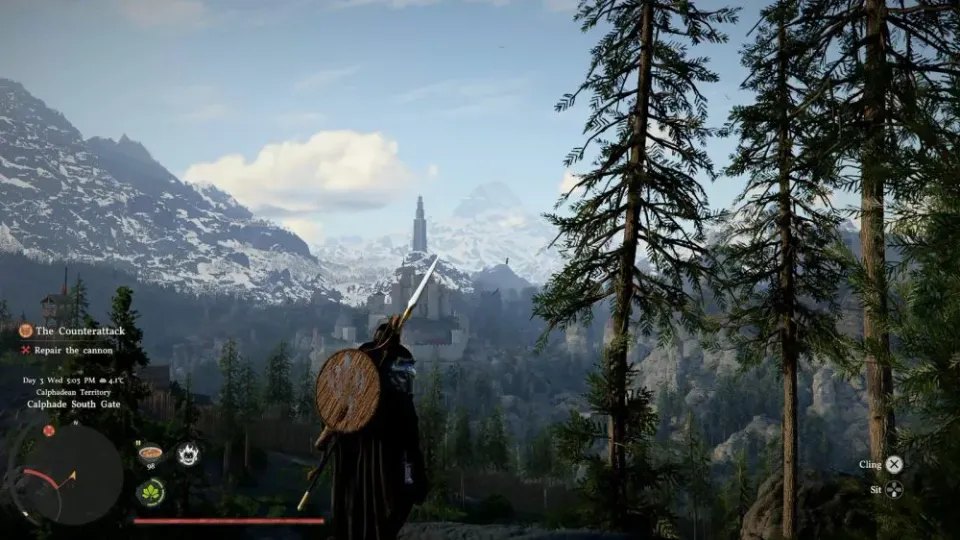
You can play Crimson Desert for 20 minutes without downloading it. That fact has been true since Pearl Abyss started offering a streamed demo through Twitch, but new reporting on November 2 turns it into a bigger business story. Amazon says a meaningful share of people who finish one of its instant-play demos then visit the game's Steam page. The company wants to bring that model beyond a few early partners. This is not a claim that those visitors all buy the game.
The difference matters to any developer trying to get noticed. A conventional trailer asks a viewer to trust that the finished game will feel as good as it looks. A downloadable demo removes some uncertainty, but it still asks for storage space, installation time and a reasonably powerful computer. A streamed trial replaces those barriers with a browser, a stable connection and a short window to play.
How the Crimson Desert Twitch demo works
The demo runs through Amazon GameLift Streams. The game itself is executing on remote hardware, which sends video and audio to the browser while receiving the player's controls. You are not watching a recorded video or controlling somebody else's stream. Your inputs affect the game directly. Pearl Abyss advertised a 20-minute session and warned that quality could depend on region and internet connection.
The basic process is simple: open the supported Crimson Desert instant-play demo on Twitch from a desktop browser, begin the session and use keyboard and mouse or a controller as supported. No large download is necessary. The convenience is real, although streaming may show compression or additional latency compared with a local copy. The experience should be treated as a way to try the combat and controls, not a full technical benchmark for your GPU.
Amazon's conversion number needs careful reading
In a September technical post, Amazon said roughly 20–40% of demo users chose to visit the corresponding Steam listing after finishing a session, across an early trial of several games. That is a store-visit rate, not a confirmed purchase conversion rate. The company did not publish an independent audit of how many visitors bought the full game, whether they later refunded it, or how those results compared with players who saw a normal advertisement.
Even with those limits, the behaviour is useful. Clicking a store page immediately after trying the mechanics suggests a stronger intention to learn about the game than scrolling past a sponsored video. Amazon describes the programme as experimental, and the participating titles have included Crimson Desert, Palworld, Dragon Age: The Veilguard, REANIMAL and World of Tanks: HEAT. A single high-profile game should not be used to predict the results every indie title will achieve.
Why the format is different from cloud gaming subscriptions
People often hear 'game streaming' and think of a subscription library where their entire games run on another machine. Instant demos are smaller. The publisher selects an experience designed to explain the game quickly, and the session ends before the user gets deeply into the campaign. In Amazon's developer guidance, the best demo drops players into a clear, self-contained sequence, gives them a moment to understand the controls and avoids spending the first ten minutes in menus.
That design can also distort what a game feels like. A 20-minute slice of Crimson Desert might show spectacular combat but cannot fairly represent dozens of hours of progression, exploration and story. A poor connection can make fluid action appear less responsive than it is locally. The correct editorial test is whether the demo helps a person decide if the game interests them, not whether it proves the full product will run identically on their PC.
Why this could matter to smaller studios
The download requirement is especially punishing for lesser-known developers. Players may take a chance on a famous game with a 30GB demo because they already know what they want. A new studio has to persuade someone to install software merely to learn whether its core idea is fun. Browser-based trials could make that first interaction much easier, provided the cost of streaming sessions is manageable for the publisher.
There is a catch: the service moves computing expenses from the player to the company providing the demo. Cloud hardware, bandwidth, session capacity and anti-abuse controls are not free. The economics need to make sense after the promotional campaign, not just during a limited demonstration.
For now, Crimson Desert is an instructive example. It is possible to make a real AAA game playable inside a browser for a few minutes and send interested users to the store afterwards. Whether that becomes a durable alternative to conventional demos will depend on purchase data, not only clicks.