
Microsoft made $92.3 billion in revenue in the three months ending September 30. That figure is large enough to swallow several games publishers whole. On October 28, the company reported 19 percent year-on-year growth and a 48 percent jump in Azure revenue. Xbox content and services, meanwhile, declined 2 percent.
The contrast is striking, and easy to abuse. It would be wrong to claim Xbox is losing money from those numbers. It would also be wrong to look at Microsoft's record quarter and assume that the games business must be flourishing with everything else. Revenue growth and profit are different measures. The earnings release tells us which businesses are expanding fastest; it does not give a simple moral judgment on the value of games.
What it does show is a company whose centre of gravity is increasingly defined by cloud computing and AI infrastructure.
The exact numbers matter
Microsoft reported $92.279 billion of total revenue for its first quarter of fiscal 2027, up from $77.673 billion in the same quarter a year earlier. Azure revenue was $33.165 billion, against $22.384 billion previously. That is the scale behind the headline growth rate. Microsoft Cloud as a broader category reached $63.9 billion, up 30 percent.
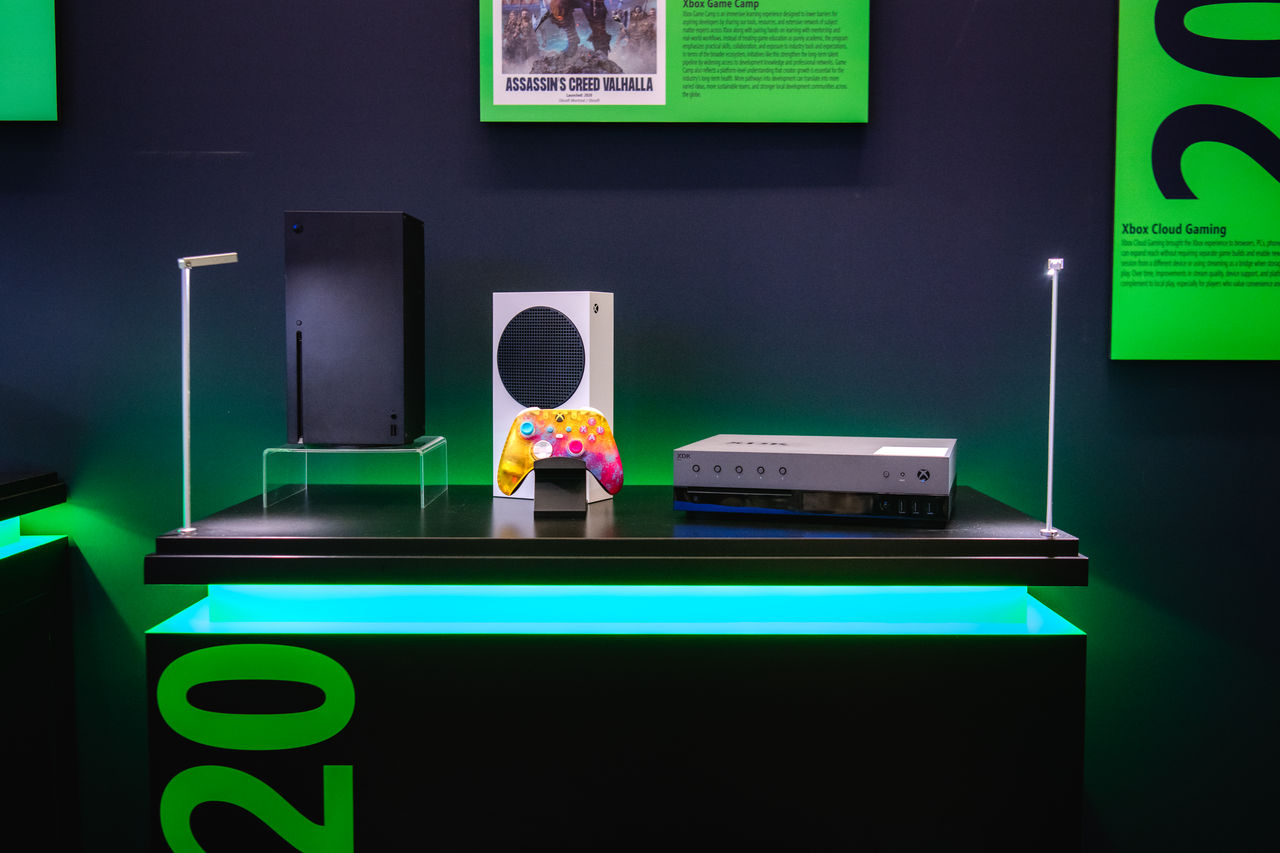
The company also reports Xbox as one of its product and service offerings. That line totalled $5.379 billion, compared with $5.508 billion a year earlier. Separately, the business highlights show Xbox content and services revenue down 2 percent, or down 1 percent after accounting for currency effects. Those are related figures but should not be treated as interchangeable segment definitions.

Microsoft reorganised its reporting segments for fiscal 2027. The larger Agents and Infra segment produced $76.8 billion of revenue and grew 25 percent. Devices and Consumer, where gaming sits in the broader mix, brought in $15.5 billion and fell 3 percent. That does not mean every product inside the second group shrank by exactly 3 percent. It means the entire reporting group moved that way.
If all somebody remembers is that the company made $92 billion, they miss the contrast. If all they remember is Xbox down 2 percent, they miss the fact that Microsoft is still selling billions of dollars worth of gaming products and services per quarter.
A games company inside an AI infrastructure company
An Xbox console is a tangible promise: buy the machine, install the game, use a controller. Azure is less visible. It rents computing capability to organisations building websites, applications and AI services. The same company can invest in these two very different products, but the speed and size of their growth will affect what investors ask management to prioritise.
There is an important distinction between business arithmetic and consumer experience. A player might judge Xbox by the games available, subscription value, performance and whether friends can join them. Shareholders may ask about revenue mix, cloud margins, hardware demand and returns from enormous AI investments. One set of questions does not replace the other.
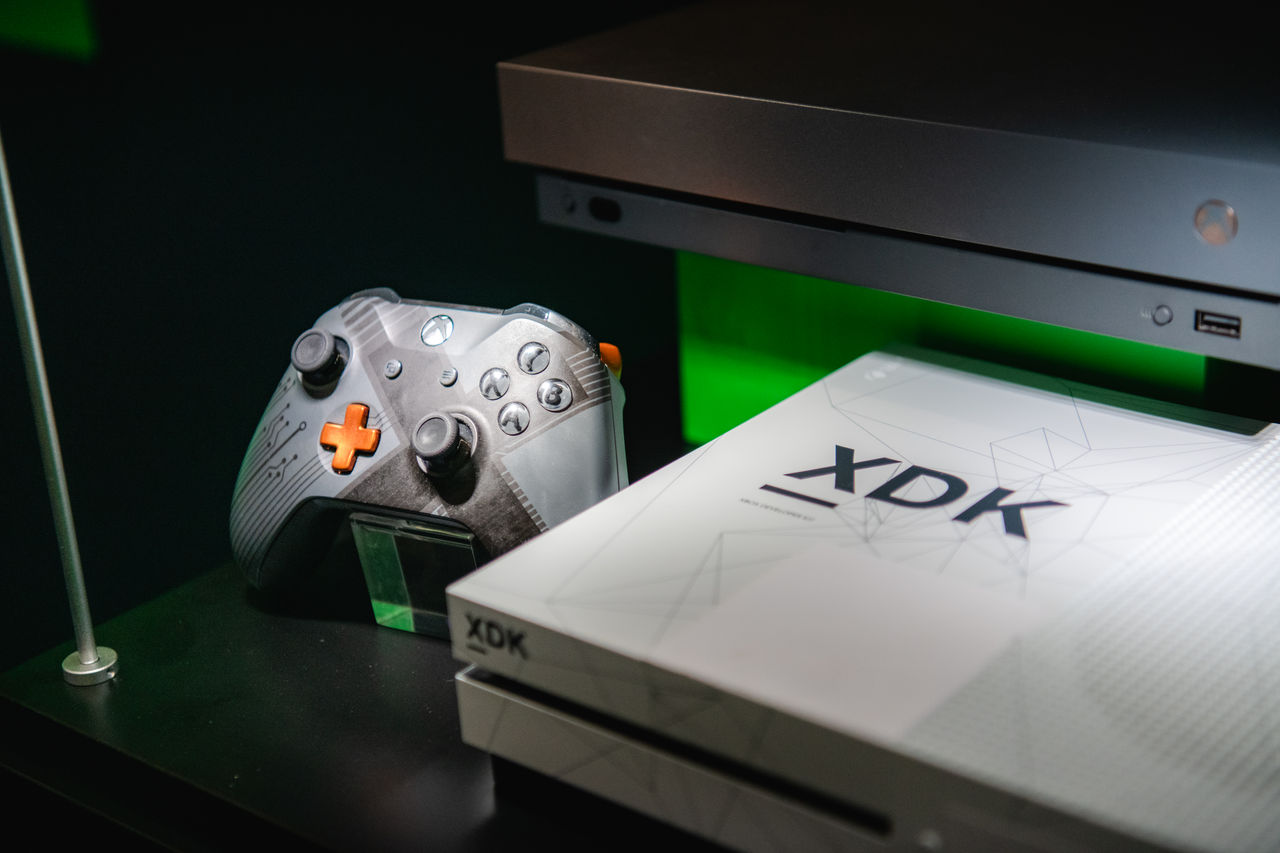
Microsoft continues to describe Xbox as an ecosystem spanning console, PC and cloud. In September it announced a planned Xbox app partnership with TCL smart TVs, adding another way for eligible customers in supported markets to stream games. The company already offers gaming on selected TVs and streaming devices. This helps explain why sales of a particular console are no longer the only visible measure of Xbox's reach.
That does not mean cloud distribution removes every obstacle. Service availability varies by country, device, game, plan and network quality. Streaming a high-speed game is a different experience from running it locally, especially where latency and data costs matter. For Indian readers, a product announcement covering more than 25 countries is not proof that every television or subscription option is available in India.
Should gamers be worried about the AI boom?
Microsoft is pouring resources into datacentres, networking and AI systems. The earnings report shows how successfully those investments are helping grow Azure revenue, but it does not disclose a neat comparison of dollars moved from Xbox development into AI hardware. Claims that Azure gains automatically caused a gaming decline would need evidence the earnings release does not supply.
What can reasonably be said is that the company has more than one set of customers to satisfy. Large enterprise buyers pay for computing capacity. Families buy consoles or subscriptions. Independent developers want accessible publishing tools. A healthy plan for the gaming side still needs games that people want, relationships with studios, clear prices and hardware that makes sense for its audience.

Gaming also creates value that does not appear in a one-line growth comparison: intellectual property, developer ecosystems, player communities and long-lived titles. Those strengths should not be used to excuse weak performance. They explain why it would be simplistic to evaluate a platform as though it were just another cloud subscription.
The next question for Xbox is not whether it can match Azure's 48 percent revenue growth. Very few businesses can. It is whether Microsoft can make gaming more useful to players while its corporate ambitions grow elsewhere. That means watching future content and services trends, product decisions, cloud access, and the games themselves rather than reading a quarterly percentage as a final verdict.
Microsoft's record quarter belongs in a technology headline. Xbox's smaller, negative movement belongs in a gaming headline. The interesting story is that both headlines came from the same company on the same day.

