
On paper, AK Gold Esports won the points race. They collected 94 points across the PUBG Mobile Global Open 2026 Season 2 final. Wolves Esports had 86. Iraq’s 4K Esports even finished between them, on 88. Yet when the last match ended in Lahore, it was Wolves lifting the trophy.
The difference came down to one rule, and one Chicken Dinner on Miramar. The final used a format called the Smash Rule: build enough points to become eligible, then win a later match to become champion. Wolves met both conditions in Match 12 on October 25. Their victory was valid, but the final points table invites a question any battle royale fan can understand: should the team that scores the most across two days lose the title to a team that gets the final win?
There is more to this final than that argument. Nepal’s Horaa were leading halfway through. A first-time international team from Iraq took third and produced the tournament’s most valuable player. The reigning PMGO champions failed to reach the finals in their own country. And more than 1.14 million people watched at the same time at the event’s peak. Here is how the week unfolded, why the rule mattered, and what the result means before December’s world championship.
PMGO 2026 Season 2 | At a glance
- Event
- PUBG Mobile Global Open 2026, Season 2
- Dates
- October 20–25, 2026
- Host city
- Lahore, Pakistan
- Total teams
- 32; Grand Finals: 16
- Total event prize pool
- $500,000
- Winner
- Wolves Esports (North America)
- Grand Finals points leader
- AK Gold Esports (94)
- Champion’s Grand Finals points
- Wolves (86)
- Smash Rule target
- 67 points
- Winner’s reported total earnings
- $60,000 ($50,000 Grand Finals + $10,000 Group Stage)
- PMGC award
- 150 qualification points and confirmed December berth
- Peak concurrent viewers
- 1,143,187 (organiser / Esports Charts)
Start with the ending: 86 points beat 94
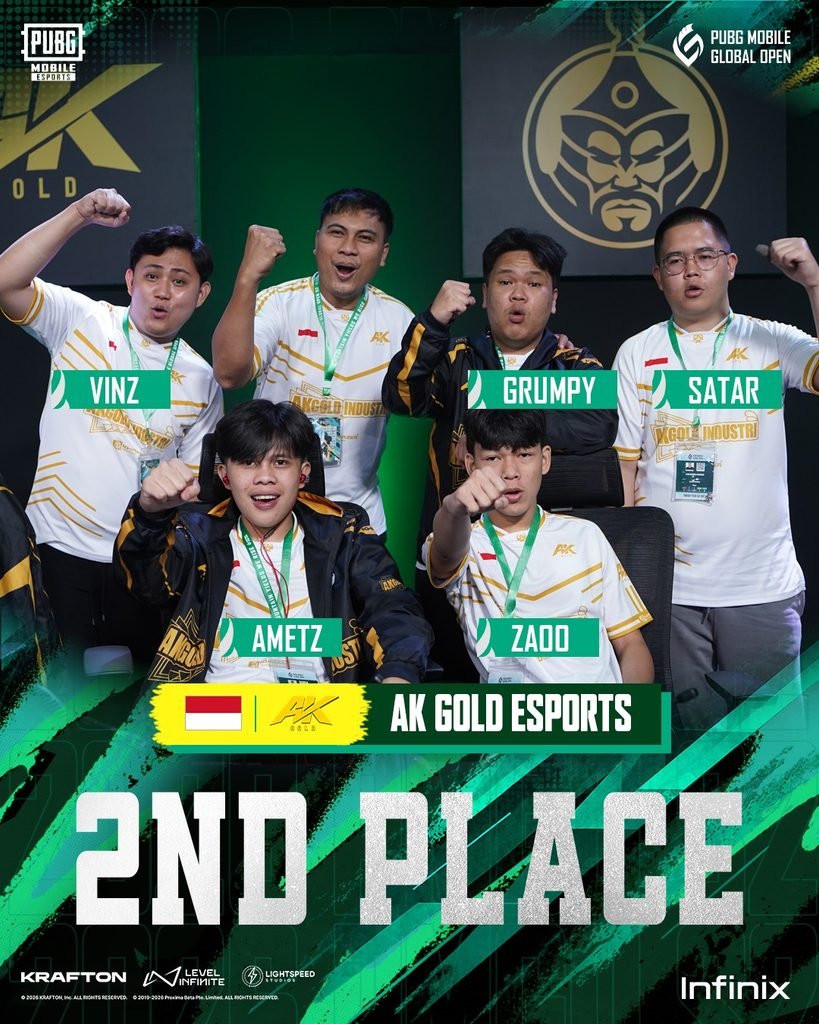
The scoreboard is the best place to begin because it explains why this result feels strange to someone who only checks the standings. AK Gold finished eight points ahead of Wolves. They had 61 elimination points, compared with Wolves’ 48. Their ability to find fights and secure kills was one of the strongest performances in the lobby. Under a normal points-only system, they would have finished first.
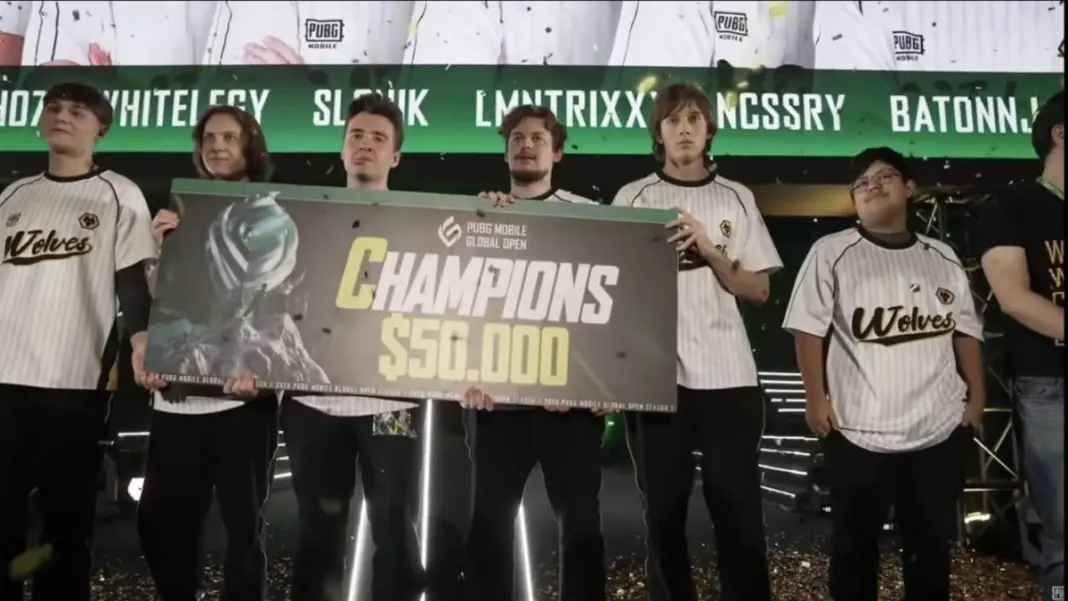
But this was not a normal points-only final. After qualifying under the match-point rule, Wolves finished their last Miramar game with eight eliminations and the Chicken Dinner. That win immediately ended the tournament. AK Gold had accumulated more points, but it had not delivered the qualifying match victory before Wolves did. The official organiser’s recap confirms the decisive Match 12 result.
The top eight in Lahore: final points versus official placing
| Official finish | Team | Final points | What stood out |
|---|---|---|---|
| Champion | Wolves Esports (North America) | 86 | Won Match 12 after reaching Smash eligibility |
| 2nd | AK Gold Esports (Indonesia) | 94 | Highest total and 61 elimination points |
| 3rd | 4K Esports (Iraq) | 88 | International debut; ALA named MVP |
| 4th | Horaa Esports (Nepal) | 86 | Day 1 leaders; tied on points with Wolves |
| 5th | OLD NOT (Uzbekistan) | 83 | Late-final threat |
| 6th | The MongolZ (Mongolia) | 82 | 54 elimination points |
| 7th | Influence Rage (Brazil) | 81 | Won Matches 10 and 11 |
| 8th | ULF Esports (Türkiye) | 77 | Huge opening-match win |
The top eight tell two stories at once. The official finish is the first column. The points are the third. They do not follow the same order because the championship was decided by a match-winning condition rather than a final points total. That is why saying AK Gold was ‘robbed’ skips an important fact: every finalist played under the same announced rule. Saying its 94 points mean nothing would be just as wrong.
How the Smash Rule works, without the jargon
Think of the final as having two steps. First, a team must cross a points target. That makes it eligible to win. Second, the team must earn a Chicken Dinner in a later game. The first eligible team to do that wins the championship, even if another team has a higher overall points total.
In Lahore, the points target was based on Day 1. Horaa Esports, from Nepal, led after six games on 57 points. Organisers added 10 to that number, setting the target at 67. Teams could spend the next day chasing that number, but simply reaching it did not end the final. They still had to finish a subsequent match in first place.
What it took to win PMGO Season 2
| Stage | What happened | Why it mattered |
|---|---|---|
| After Match 6 | Horaa led with 57 points | Finals match point set at 67 (57 + 10) |
| Match 10 | Wolves crossed the threshold | Wolves became eligible to win in a later match |
| Match 11 | Influence Rage took another Chicken Dinner | Still no champion under the Smash condition |
| Match 12 | Wolves won on Miramar with eight eliminations | The title was immediately decided |
The catch is easy to miss: a win that happens before reaching match point does not automatically crown a team. Wolves needed to pass the target, stay alive in the competition and then close out another game. It took them until Match 12. A planned thirteenth-match fallback was never needed. The published tournament format had allowed an extra game if no eligible team won in the scheduled twelve.
Watch the full official PUBG Mobile Esports Grand Finals Day 2 broadcast for the deciding Miramar match, the reaction and the trophy ceremony.
Nepal led the room before Wolves took control
The opening day belonged to South Asia. Horaa Esports had 57 points after six matches, helped by a strong second-place finish with 15 eliminations in Match 3 and a Chicken Dinner in Match 4. ULF Esports sat second with 53. Wolves had 39, level with OLD NOT and 4K, although an Erangel Chicken Dinner in the sixth match kept them close enough to fight the next day.
That is an important part of this story. Horaa did not simply appear in fourth place after the event ended. They set the number every finalist had to chase. The Nepali team eventually finished with 86 points, the same total as Wolves. It was Horaa’s best placement at an S-tier event, according to Esports Charts. The outcome was painful, but it also shows how a team from South Asia can challenge leading organisations in an international lobby.
For Indian readers, the distinction matters. There were no Indian teams in the PMGO Season 2 field. This was PUBG Mobile’s international circuit, not a BGMI competition, and the qualification systems should not be mixed up. Still, Horaa’s performance is relevant to anyone following battle royale esports in the region. It offers a recent example of a South Asian roster setting the pace against established global opposition.
The defending champions did not even make the final
There was a second twist to the Lahore event. Pakistan hosted an official global PUBG Mobile competition for the first time, but its most celebrated entrant did not survive the group stage. 4Thrives Esports had won PMGO Season 1 in Jakarta in June. Back on home soil for Season 2, the team finished last in Group B with 11 points. There would be no repeat championship run in front of the Pakistani crowd.
A defending champion exiting early and an eventual winner finishing below two rivals on points might make the event sound random. It was anything but. Thirty-two teams arrived through regional routes, the group stage removed the bottom teams, and a survival round gave others one final way into the top 16. Even strong squads had to survive several different tests before they could think about the title.
Iraq’s 4K Esports found a star in its first international tournament
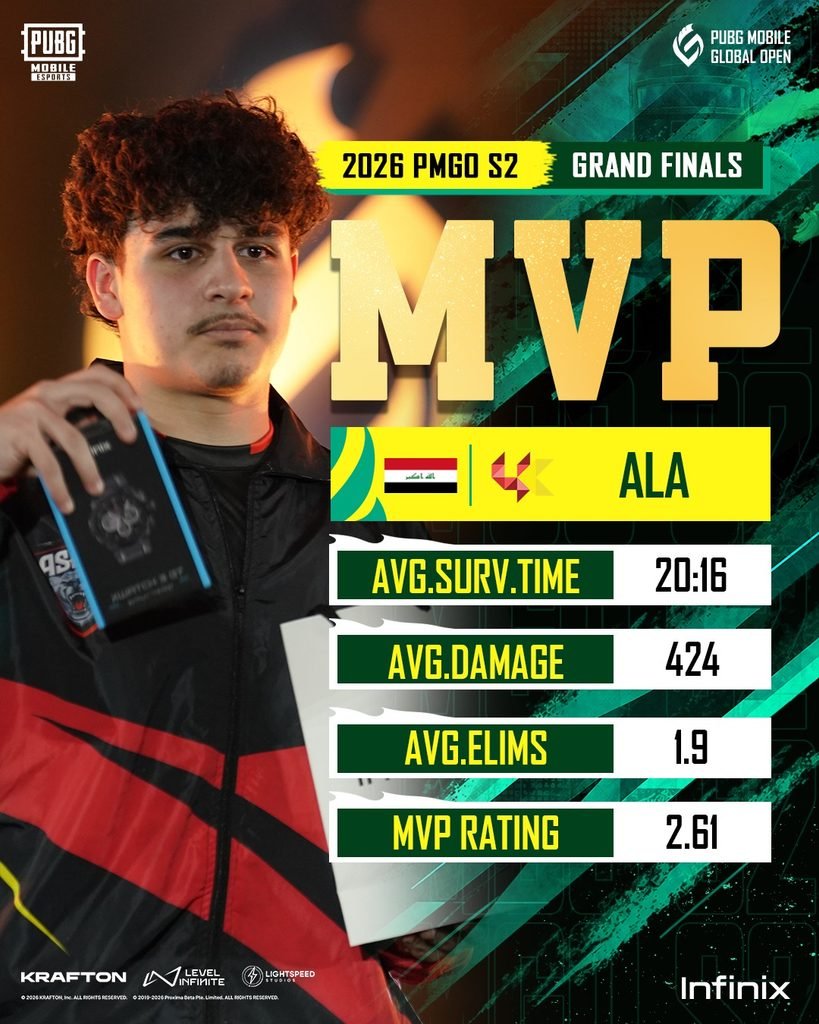
While the main title story centred on Wolves and AK Gold, 4K Esports gave the final one of its brightest individual performances. The Iraqi team finished third with 88 points in its international debut. Its player ALA was named Grand Finals MVP after scoring 23 eliminations. This was a roster that arrived as a newcomer and left with a podium place and the event’s leading individual award.
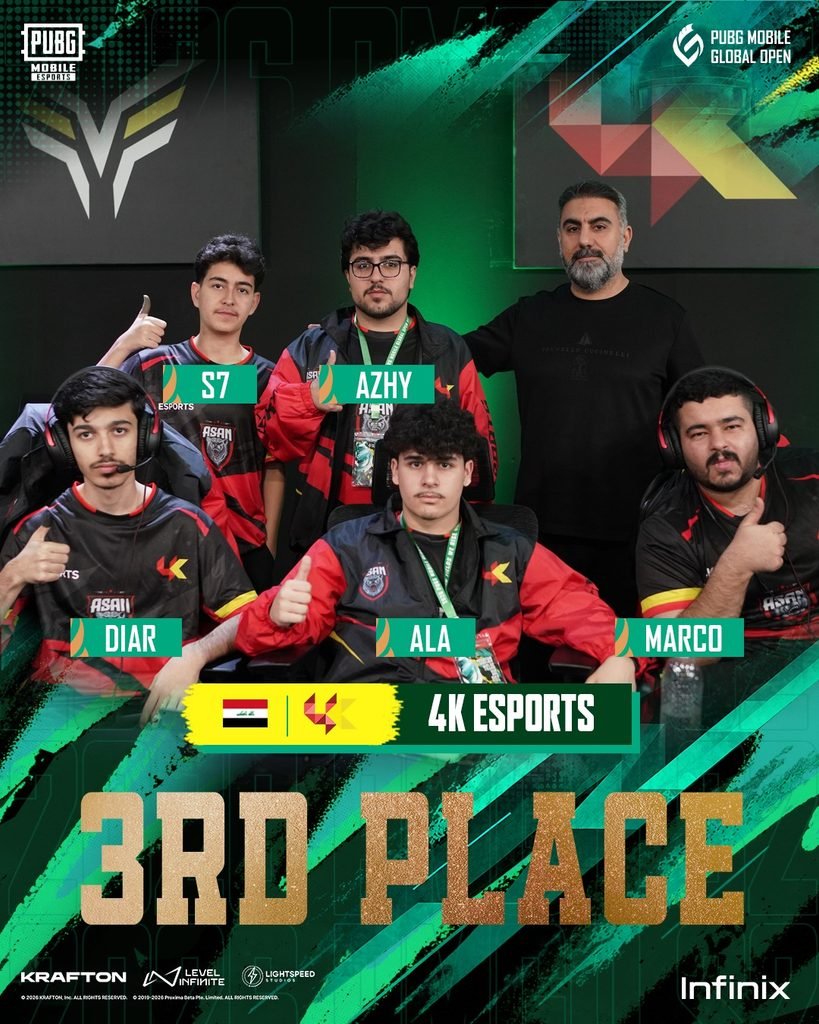
That combination is worth more attention than a brief mention at the bottom of a results story. Across twelve final games, 4K posted 61 elimination points, matching AK Gold’s total. It did not record a Chicken Dinner in the finals. Under Smash, that meant its impressive fighting numbers could not close the event. The same rule that rewards a last-game finish can be brutal for teams that repeatedly win fights but cannot survive to first place.
The wider award list tells a similar story about the skills that matter in a large lobby. Satar of AK Gold received Best In-Game Leader, SkY of Horaa won Eagle Eye, Carrilho of Alpha7 took Grenade Master and Bigetron by Vitality’s Zeta earned Field Medic. A title highlights one team; those honours help show who performed when the spotlight moved elsewhere.
Was the rule fair? There are two reasonable answers
If your definition of a champion is the team that plays best over the most matches, AK Gold has the stronger case. Its 94 points lead the final, and its 61 elimination points were far ahead of Wolves’ 48. A consistent points system rewards repeated good decisions: finding safe routes, taking worthwhile fights and surviving across several maps. It makes a tournament less dependent on the final moments of one game.
If your definition requires a team to prove it can finish the job under maximum pressure, Wolves has the stronger case. Match-point formats keep several teams alive deep into a final and force contenders to do something unmistakable: outlast everyone on the map. Wolves knew what was needed and won when it counted. The victory was not an exception made after the scores were counted. It followed the pre-announced rules.
The more useful question for organisers is whether audiences understand those rules before the first match begins. Players should know how a title will be awarded. Fans should be able to look at a live standings graphic and immediately tell which teams are eligible. A final can have a dramatic ending and still explain the stakes clearly. Without that explanation, a legitimate champion can look like the beneficiary of a scoring mistake.
There is also a prize-money difference. Wolves collected $60,000 across the event: $50,000 for winning the Grand Finals and $10,000 for leading Group B. AK Gold received $25,000 for its Grand Finals runner-up finish, according to the published payout breakdown. Competitive formats do not only change which team holds the trophy. They change how rewards are distributed, making clarity especially important.
A record audience did not watch by accident
Organisers reported a peak of 1,143,187 concurrent viewers, above Season 1’s 1,077,552. Independent audience tracker Esports Charts also reported roughly 8.7 million hours watched for the event. The finals had a clear hook: a champion could emerge whenever an eligible team won. That gives viewers a reason to keep watching right through the final circles.
But the audience story goes beyond the English broadcast. Esports Charts found the Nepali-language peak audience rose by 72% compared with the previous PMGO, as viewers followed Horaa. Community streams also made up a larger portion of viewing, with more co-streaming channels active. It is evidence that local teams and local-language coverage can pull new communities into a global tournament, even when the eventual champions come from another region.
That is useful for Indian esports too. A clear qualification path matters, but so do familiar faces, regional commentary, match clips and the feeling that the event belongs to the people watching it. Horaa gave Nepal a team to rally behind. Lahore gave Pakistan a global stage, even after 4Thrives went out. Neither of those moments needs a trophy to have value.
For Wolves, the next test is the world championship
Wolves’ result completes a remarkable turnaround. Earlier in 2026, the organisation finished 21st at the Season 1 main event. It returned through the Americas route, topped its Season 2 group in Lahore and then won the biggest match of the week. The team earned 150 qualification points, and PUBG Mobile Esports has confirmed those points secure its place at PMGC 2026.
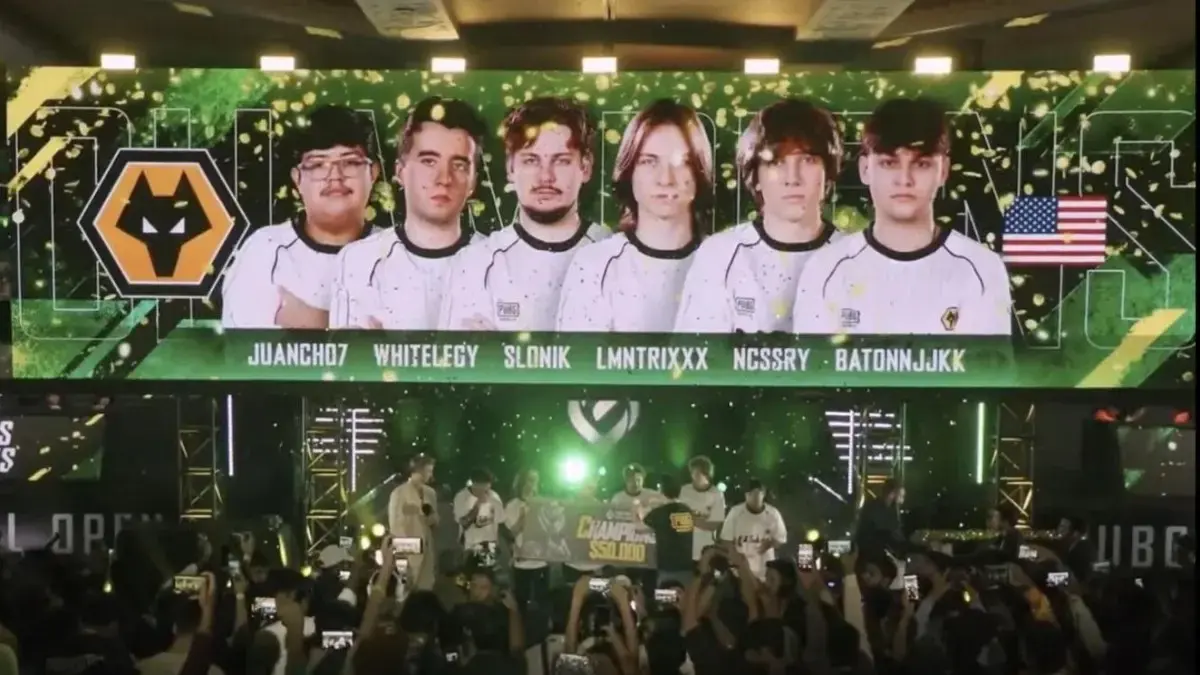
The world championship is scheduled for Türkiye, with a $3 million prize pool. Its competition will be tougher, and another trophy is never guaranteed. Wolves will arrive with proof that it can win a match-point final, but also with numbers opponents will study: AK Gold and 4K recorded more points across those twelve final games. A championship can answer one question while leaving several more open.
When people remember Lahore, they will remember that Wolves won. They should also remember the teams that made them work for it: AK Gold’s 94 points, Horaa’s opening-day lead and 4K’s standout debut. That is the fuller story of PMGO Season 2. One team earned the trophy under the rules everyone played; several others proved they were good enough to make the result worth arguing about.