
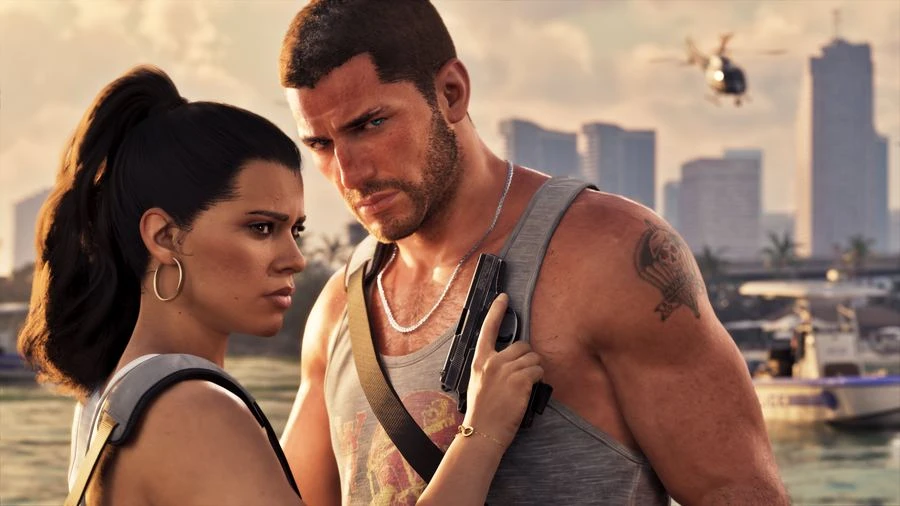
Grand Theft Auto has long been a game in which the player can cause chaos, lose the police and move on to the next objective. GTA VI still offers the freedom associated with the series, but Rockstar has added a system that makes some of the behaviour between missions part of the character’s identity. It is called Criminal Profile.
In an interview published by Eurogamer on November 25, Rockstar’s Rob Nelson connected the idea to the work the studio had done on Red Dead Redemption 2. The earlier game showed how a system tracking a character’s conduct could connect open-world actions with the experience of playing a story. GTA VI takes that lesson into a very different setting.
Crime is not the same thing as cruelty
The distinction is essential to understanding why the mechanic exists. Jason and Lucia are criminals; a game about their lives cannot simply punish every unlawful act as a mistake. What Rockstar is exploring is the difference between completing an objective and the manner in which the player chooses to interact with the people around it.
Nelson’s explanation, also covered by GamesRadar, frames empathy as another way of making interactions interesting. If every person in the open world exists only as a target or obstacle, the player loses opportunities for relationships, consequences and surprising encounters. A more responsive world can give those everyday interactions a purpose.

What Red Dead Redemption 2 established
Arthur Morgan’s honour system was effective partly because it could reflect a player’s actions outside the main missions. GTA VI has a different tone, a different pair of protagonists and a world centred on modern crime rather than the decline of the outlaw era. Criminal Profile should therefore not be treated as a simple copy of Arthur’s honour meter with another label.
For players, the most useful way to approach the new system is to observe how a chosen play style affects the experience over time. Avoid assuming that a single action fixes a character’s profile or guarantees a particular ending. Exact thresholds and all consequences are not established by the interview reporting reviewed here.
The freedom to play differently
Some players enjoy GTA primarily as a sandbox, while others come for characters, conversations and the main campaign. Criminal Profile adds another layer to that debate without requiring every player to enjoy the same things. It asks whether a game world becomes more interesting when it occasionally acknowledges the person you have chosen to be inside it.
This article deliberately avoids late-game plot details. Rockstar’s explanation is interesting even without knowing how Jason and Lucia’s story ends: it reveals why a studio best known for open-world freedom is investing in the consequences of that freedom.