
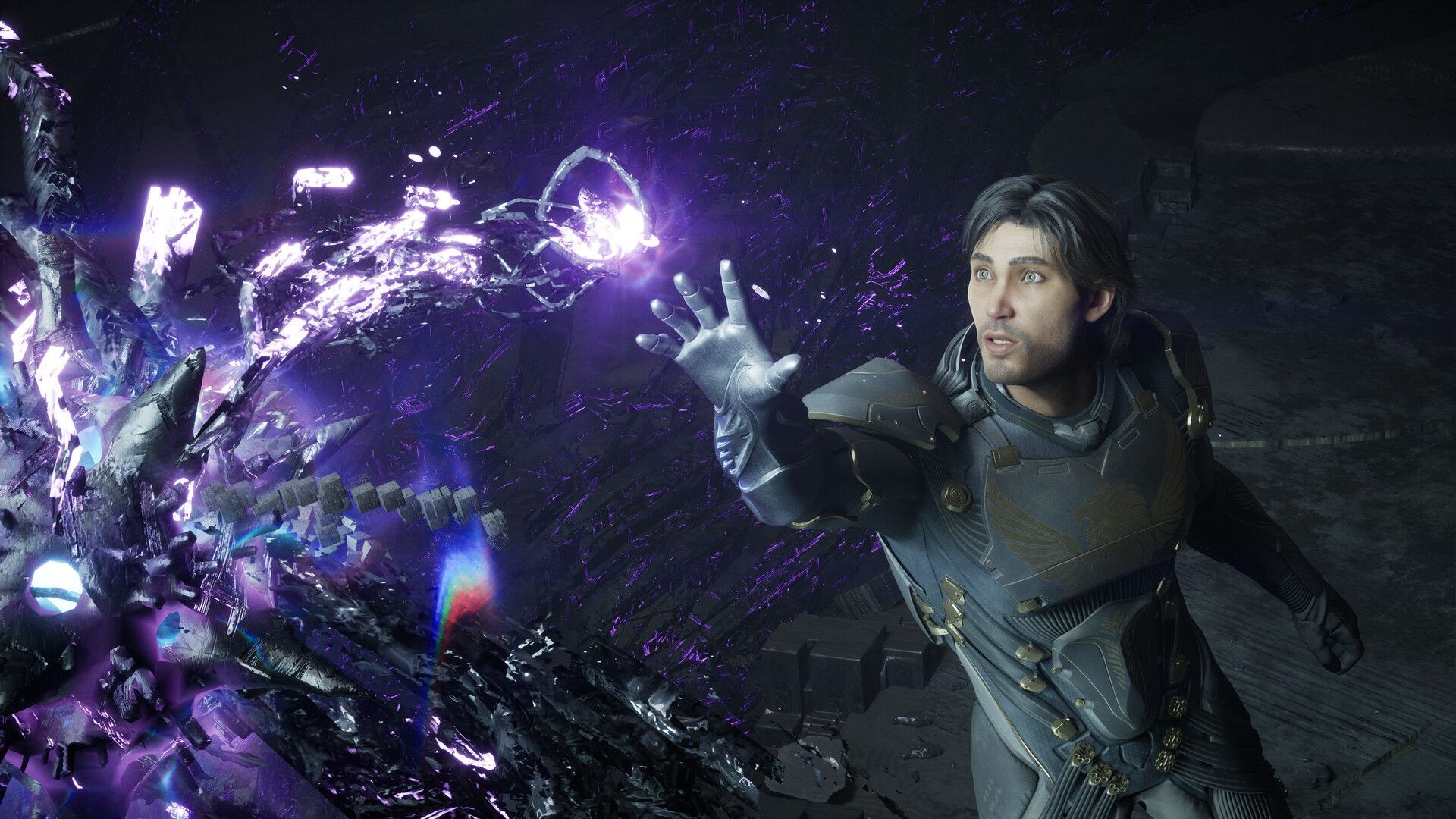
A game can ask you to save a city and still make you the villain of its politics. That is the most interesting promise in the new EXODUS gameplay showcase. Archetype Entertainment released around 40 minutes of footage from a mission called 'Liberating the Kay' on October 28. There are firearms, zero-gravity encounters, a mysterious space station and the usual science-fiction machinery. But the most revealing choice is not whether to win a fight. It is whether the people you have helped should be allowed to make their own decisions afterwards.
The mission takes place several hours into EXODUS. Jun Aslan needs parts for a ship capable of interstellar travel. Suliman Tenjin, a powerful figure from the Tenjin Dynasty, can help. His price is a favour: take back Khonsu, an orbital defence platform guarding Jun's homeworld, Lidon. The platform has been home to the Kay, a species of Awakened frogs, for generations. Jun's half-brother Gideon Aslan and his forces have seized it. The setup sounds like an ordinary rescue mission. It becomes less straightforward when the person funding the rescue wants something from the rescued.
A rescue with terms and conditions
Archetype's official breakdown lays out three sample decisions. A wounded enemy can be given a med pack or left untreated. A guard's keycard can be bought, taken by force or ignored. Those are familiar RPG choices, framed as the difference between the Paladin path, associated with virtue, and the Immortal path, associated with ambition. The final decision makes the earlier ones look like preparation.
Suliman wants Jun to alter Khonsu's beacons so that the Kay remain loyal to his Dynasty for generations, in exchange for protection. The alternative is to insist on protecting Khonsu without controlling the Kay. Here is the uncomfortable part: both choices follow a successful military intervention. Helping vulnerable people is not the end of the story. It is the moment somebody asks who owns the result.
There is a strong narrative idea buried in this bargain. Players often expect 'good' choices to be free, or to require only a short-term sacrifice of money or resources. EXODUS proposes a different cost. If Suliman has the ships, the influence and the engineering capacity to protect a liberated community, refusing his political conditions may put that community at risk. Accepting the deal might secure safety by removing autonomy. The consequences are promised by the developer; their full shape cannot be verified from a demo of one mission.
The frogs are not a joke
The Kay are sentient Awakened creatures, not disposable monsters. One of the characters shown in the material is Kay 42-C, who describes himself as an expert on humans. That detail does more work than a generic lore entry. Giving the community names, opinions and a history on Khonsu changes the player’s relationship to it. A player may begin the mission treating the Kay as a reason to fight Gideon's soldiers, then discover that they have interests of their own.
That is where the game's inheritance from character-driven RPGs becomes clear. Archetype was formed with veterans who worked on major role-playing franchises, including BioWare projects. The connection does not guarantee that EXODUS will deliver a narrative worthy of those earlier games. It does help explain why the showcase emphasises companions, factions and decisions rather than selling a shooter with dialogue attached. The moral dilemma is being presented as part of the core fantasy.
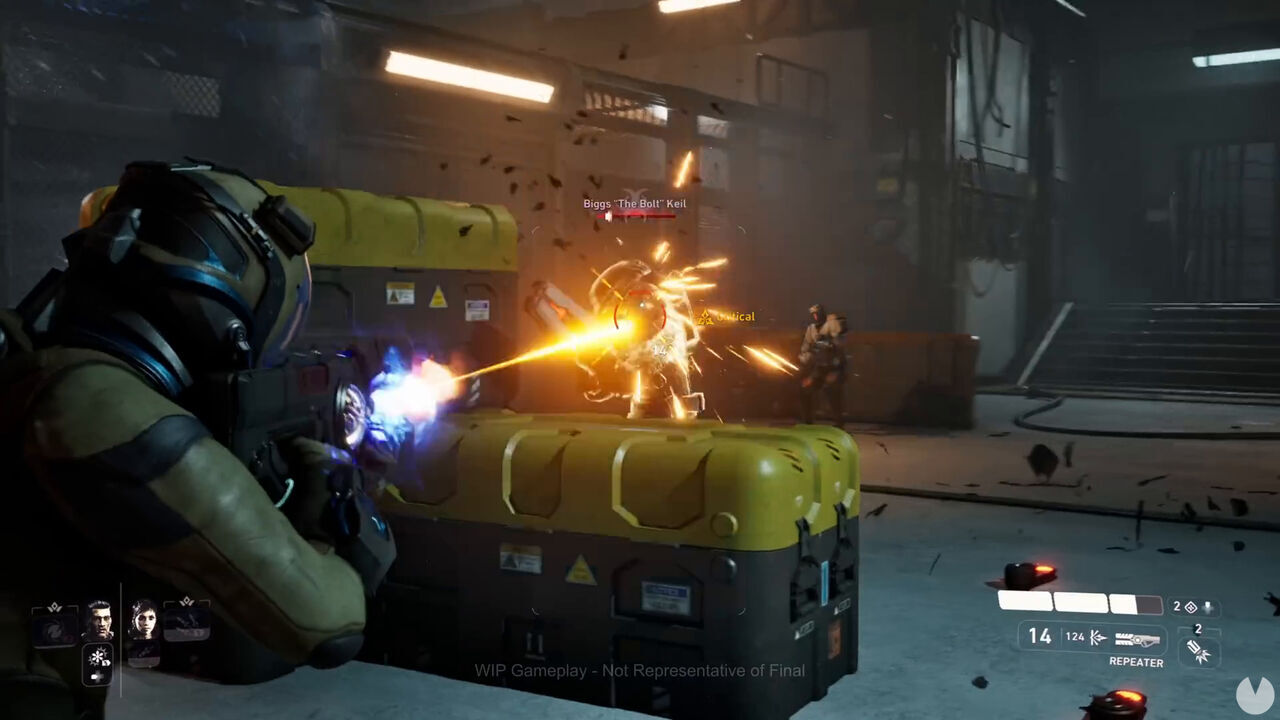
The mechanics shown are not incidental either. The developer describes clearing ghosts in zero gravity, using a gauntlet's Petrify ability to overcome a plasma-beam obstacle, and fighting with companions while Suliman pursues his own objectives. EXODUS appears to want conversations, navigation and combat to support one another. Whether those systems stay interesting across a long single-player campaign is a different question from whether a 40-minute edited showcase looks good.
A universe that makes time personal
EXODUS also centres its wider science fiction around time dilation. Interstellar travel can separate the traveller's experience of time from the years passing elsewhere. That creates a promising problem for a story about loyalty: the person returning from a mission may not re-enter the same political world they left. Friendships, families, governments and promises can all age differently. That possibility makes the Kay's demand for freedom across generations especially pointed.
It is tempting to read the mission as an explicit preview of every eventual faction ending. The footage does not justify that. Archetype says choices feed the protagonist's path as a Traveler, Paladin or Immortal, and that the fate of the Kay has lasting consequences. It has not provided a complete public map of all consequences or shown how often different branches reconverge. A mission can present a difficult decision on paper and still funnel players to similar outcomes later. That is precisely what the full game will have to prove.
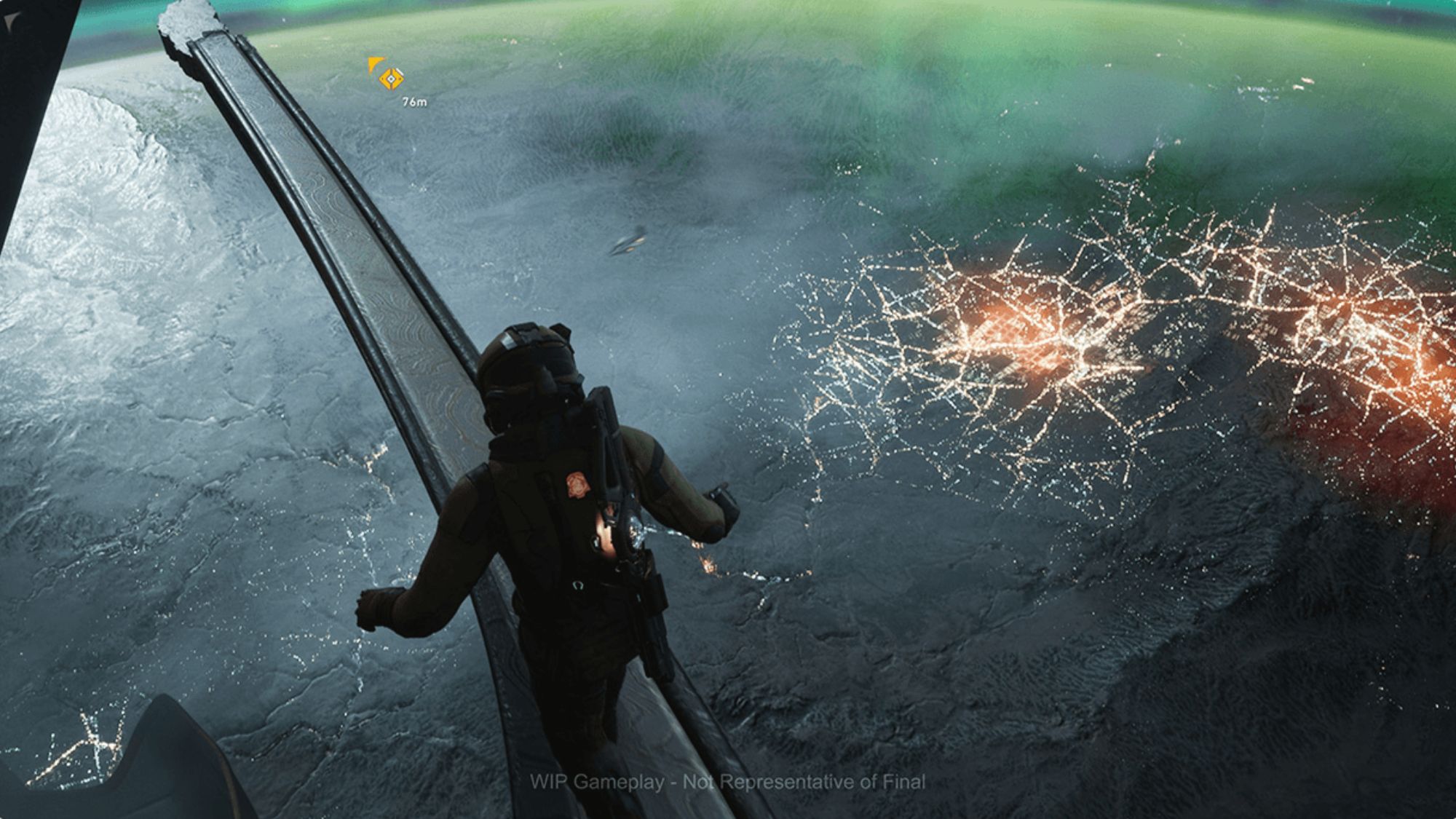
EXODUS is currently scheduled for April 7, 2027, on PlayStation 5, Xbox Series consoles and PC via Steam and Epic Games Store. It is a forthcoming release, not a live service or an available early-access game. The demonstration should be judged as a showcase, not a review of a finished build. Its combat still bears work-in-progress disclaimers in earlier footage.
There is also a useful coincidence in the calendar. BioWare announced its closure on October 21, one week before this new EXODUS presentation. It would be crude to call one studio's closure a marketing opportunity for another. But the attention given to Archetype's work is a reminder that the appetite for companion-led science fiction RPGs has not disappeared. Players still want to argue with a squadmate, weigh the cost of a rescue and discover what their decisions mean later.
For all the noise of a 40-minute gameplay presentation, the most compelling image is not Jun firing a gun. It is an unseen future: a community of Kay living safely on Khonsu, perhaps because the player helped them, perhaps because the player sold their freedom to somebody who promised to protect them. EXODUS has shown the question. In April, it will have to show whether the answer matters.