Night City is an easy place to mistake for a protagonist. It has more personality than many of the people walking through it. Ads promise better bodies, better jobs and better lives. A street-level tragedy can play out under a billboard selling happiness. By the time somebody has earned enough money to escape, the city has usually found another price to charge.
That was the engine behind the original Cyberpunk: Edgerunners. It is also the reason a second anime can make sense without simply bringing back David Martinez and Lucy for another lap. Cyberpunk: Edgerunners 2 arrived on Netflix on October 20, 2026 with ten episodes, an entirely new main cast and a standalone story. CD PROJEKT RED and animation studio TRIGGER have not advertised it as a continuation of David's personal arc. They are asking whether Night City has more lives worth following.
The answer should be yes. The interesting question is whether the new series can make those lives feel specific rather than interchangeable.
The next crew is not a replacement cast
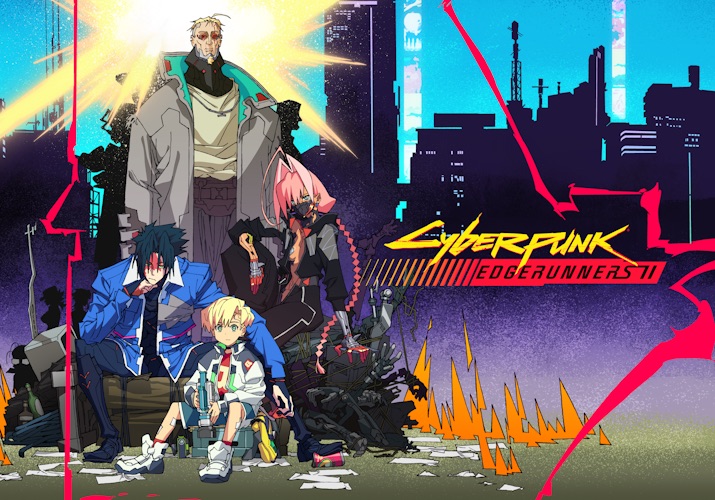
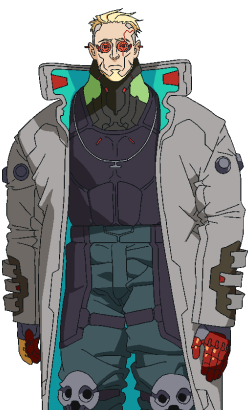
The official material describes a veteran edgerunner, a young film enthusiast, a chrome-obsessed delinquent and a Snake Nation netrunner whose paths become entangled. The current series website also places Weak, a washed-up legend struggling to live without cybernetic enhancements, alongside D, a nomad pursuing revenge with dangerous corporate interests close behind. This is a different arrangement of people and pressures from the first show's story.
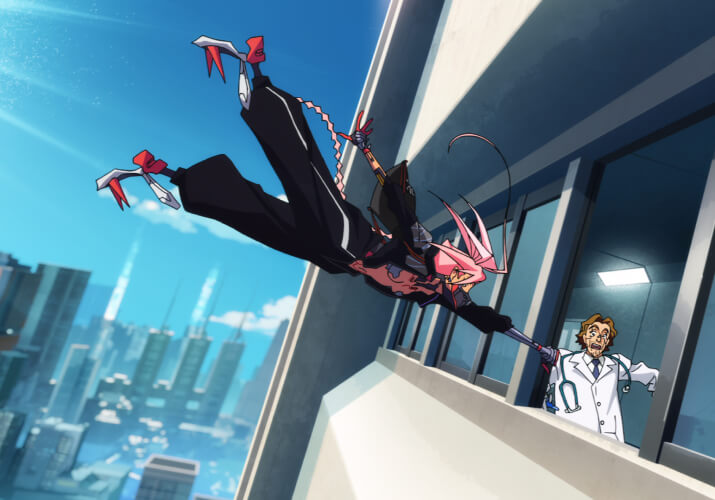
A sequel that copied David's rise, addiction to upgrades and descent toward disaster would have a hard time escaping its own reputation. The first anime's most powerful moments depended on knowing how much its characters wanted from each other, even when they could not explain it. Repeating the machinery might create familiar imagery, but not necessarily the same heartbreak. A new cast gives TRIGGER room to ask what survival looks like for people who were shaped by other corners of the city.
Weak is a particularly interesting starting point. Cyberpunk fiction usually treats technological augmentation as the next step in becoming powerful. What happens when somebody known for living through that technology loses it? The answer cannot be inferred from a character biography alone, and there is no need to spoil the new story to appreciate the setup. It reverses the usual power fantasy. A reputation becomes a weight. A body becomes an argument with the past.
The people making it understand the assignment
Kai Ikarashi directs Edgerunners 2, with Kanno Ichigo as lead character designer. Bartosz Sztybor returns as showrunner, writer and producer, with Masahiko Otsuka also among the creative collaborators. Those credits matter more than a promotional slogan. The series needs somebody who understands how the game's world works and somebody who knows when animation should deliberately refuse to look like a game.
TRIGGER's animation can turn a gunfight into a fever dream, stretching movement and colour beyond what the real-time game engine would reasonably show. That exaggeration is not a technical compromise. It is part of the appeal of adapting Cyberpunk 2077 into animation. The game asks players to navigate Night City and make choices within its systems. The anime can lock us into one person's bad decision and make us watch the consequences without the mercy of a reload button.
The official new character designs and promotional frames are visibly built for the anime rather than being generic screenshots of Cyberpunk 2077. That distinction deserves respect in coverage. An image of V standing next to an in-game car is not an Edgerunners 2 cast photo. Likewise, a still of David should not be used as the thumbnail of a feature specifically about the new crew.
One city, two very different ways of telling a story
CD PROJEKT RED coordinated the new Netflix release with Cyberpunk 2077's Update 2.5, an Edgerunners 2-themed update announced for October 22 on PC, PlayStation 5 and Xbox Series X|S, with the Switch 2 version to follow. The update and the anime are separate works, but the timing shows how the company thinks about its world: the fictional city can send people from a television series back to a playable environment.
That does not mean viewers need to purchase the game to understand the anime. The creators have described this as standalone, and that should remain the honest entry point. Familiar corporations, body modifications and gang politics add texture for players who know the setting, while the emotional stakes still have to make sense to someone opening Netflix for the first time.
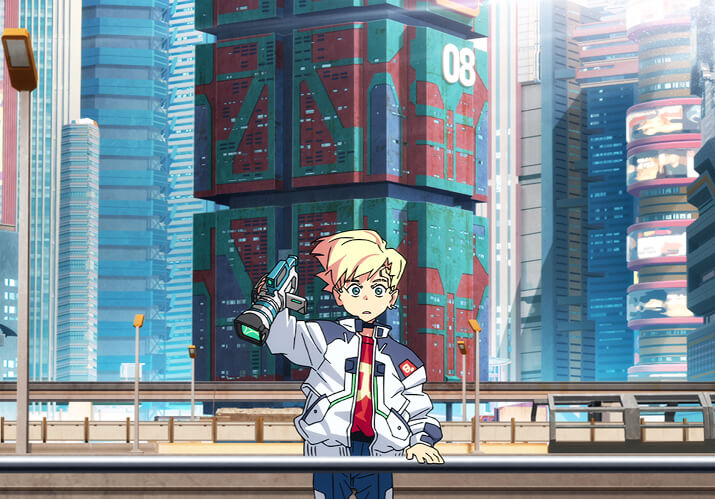
There is a commercial reason for this arrangement, of course. A successful animated series keeps a game franchise visible between major releases. But there is also a creative opportunity. Live-service games are often pushed toward endless seasonal continuity; a fixed ten-episode series can give a person a beginning, an ending and consequences the next patch cannot wipe away.
What this second series must prove
A dark ending is not automatically a meaningful one. Night City has always been cruel; cruelty by itself is easy to manufacture. What makes Cyberpunk compelling is the contrast between enormous systems and very small personal ambitions. Somebody wants to be loved. Somebody wants to be remembered. Somebody wants to get out of debt or save a friend. The city treats those wishes as raw material.
Edgerunners 2 does not have to repeat the first anime's emotional trajectory to justify its place. It needs to persuade us that these new people have private lives and strange hopes of their own, rather than acting as delivery vehicles for neon violence. That is the more demanding test, and the reason the new cast matters.
The ten episodes are available now on Netflix, including the series' Indian title page. Viewers can begin with Edgerunners 2 because it is a standalone story. Watching the first series adds context to the world, not a required prerequisite for following David's direct sequel. There is no David sequel to follow here.
Night City can survive the departure of any one character. Its residents are rarely so lucky. That imbalance, more than any particular jacket, logo or guitar riff, is what gives Cyberpunk its pulse.