

NVIDIA is changing its chief executive for the first time since its founding in 1993. Jensen Huang has resigned as president, CEO and a director, effective immediately, and finance chief Colette Kress is running the company while the board searches for a permanent replacement. The announcement came on November 12, at a moment when NVIDIA's chips sit behind an enormous share of the world's AI computing investment. For PC gamers, the name on the CEO's door may seem distant. For anyone following graphics cards, CUDA, data-centre demand or the price of computing hardware, the implications are considerably closer.
The company's own statement is the starting point. It confirms Huang's exit, Kress's interim appointment and a new board leadership arrangement. It does not announce a change to GeForce product plans, an interruption to chip shipments or a decision to abandon any market. Those are different questions, and they should not be folded into the leadership headline as if the answers are already known.
Who is running NVIDIA now?
Kress has been NVIDIA's chief financial officer since 2013. Before that, she worked in senior finance roles at Cisco and Microsoft, experience that matters in a business where forecasting demand, financing huge manufacturing commitments and communicating with investors are major parts of the job. She will retain the CFO title while serving as interim CEO. This is not the board naming a permanent successor: the company says the search will consider candidates from inside and outside NVIDIA.
The board has also appointed Harvey C. Jones as its first chair, separating the chair role from the leadership structure associated with Huang. Jones has experience in semiconductors, investment and executive leadership, including his work at Synopsys. That change is significant because a founder-led business can build decision-making habits around one exceptionally influential individual. NVIDIA now needs to show that its customers and engineering teams can continue making decisions without routing everything through him.
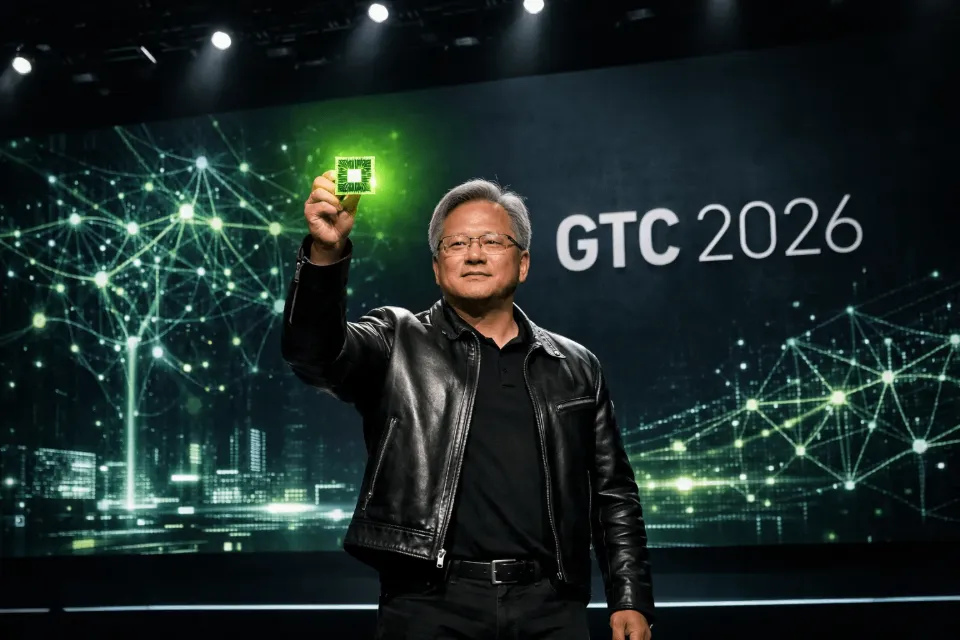
What led to Jensen Huang's resignation?
The resignation follows reporting about Huang's personal conduct and concerns involving a business contact who has been described in news coverage as the subject of foreign-intelligence suspicion. NVIDIA had already said an independent board committee would investigate the national-security questions. Huang publicly acknowledged infidelity in a company message on November 8. The situation is serious, but allegations about espionage or the disclosure of company secrets should not be written as established findings.
NVIDIA said earlier that it had no reason to believe its secrets or national security had been compromised. The independent investigation and any official law-enforcement findings are separate from the confirmed fact of Huang's departure. This distinction matters because investors may react immediately to uncertainty while factual conclusions take much longer. Reporting on a corporate crisis requires keeping those timelines separate.
Why the change matters to AI and the graphics market
Huang's defining achievement was not simply inventing a fast graphics chip. NVIDIA turned parallel computing into an ecosystem: hardware, CUDA software, networking, libraries, developer tools and long-standing relationships with researchers and cloud providers. A customer buying accelerated computing is often buying access to that entire stack. That is why the leadership transition matters beyond NVIDIA's share price. The company has relationships and product roadmaps that unfold over years, not news cycles.
There is also a tension familiar to PC players. NVIDIA grew from gaming graphics into one of the most strategically important AI suppliers in the world. Those lucrative enterprise commitments compete for attention and manufacturing resources, even though gaming continues to matter commercially and culturally. Changing the chief executive does not automatically reverse that balance. Anyone predicting immediate cheaper GeForce cards, better supply or a sudden refocus on players is speculating.
The board has said it expects operations, customer commitments and the technology roadmap to proceed without interruption. That is a statement of intention, not proof that execution will be effortless. Supply chains for advanced chips involve foundries, memory suppliers, packaging capacity, system builders and export restrictions. A stable handover would be measured in consistent delivery and reliable guidance, not in the tone of the announcement alone.
The next date investors should watch
NVIDIA has kept its next quarterly earnings schedule, with fiscal third-quarter 2027 results due November 17. Investors will be looking for the usual numbers, including revenue, guidance and demand for AI systems, but the leadership questions will probably draw attention too. Kress is already familiar to analysts through earnings calls, which may help maintain continuity in the near term.
For consumers, the sensible takeaway is narrower. Your existing NVIDIA GPU has not changed because the founder resigned. Driver support, game performance and warranties do not disappear with a CEO announcement. The bigger story is whether a company built around an unusually visible founder can preserve the engineering discipline and customer trust that made it indispensable. That question will be answered by product releases and execution over the coming quarters, not by a single day's market movement.
