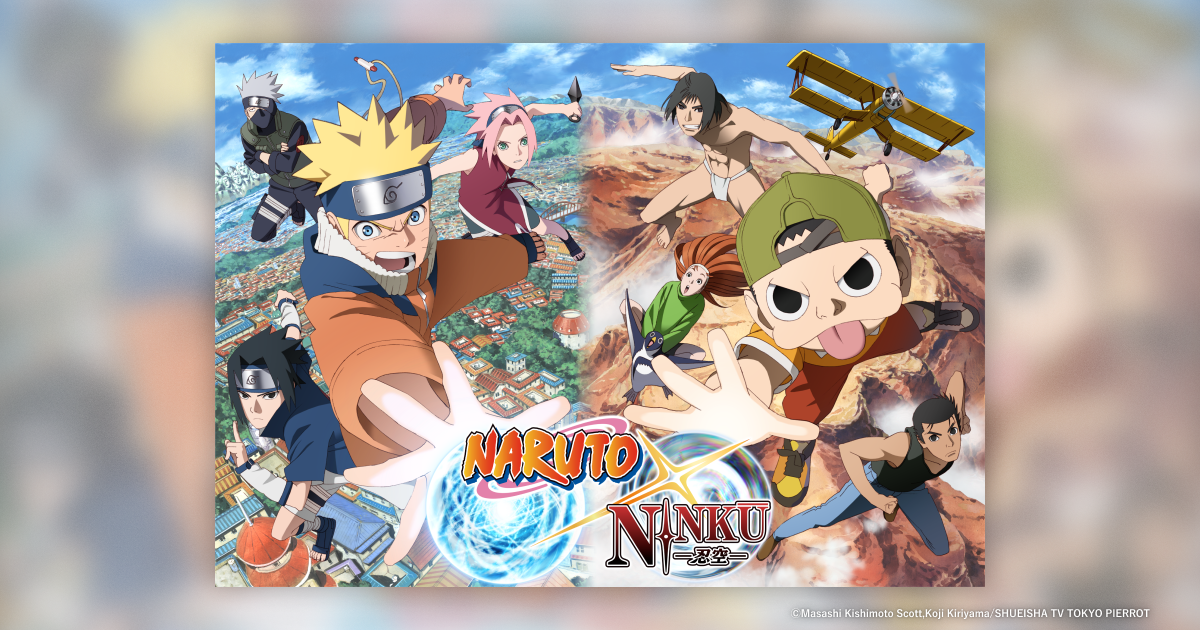
Naruto Uzumaki spent much of his early life trying to be taken seriously. His next mission has a stranger purpose: meeting the characters who helped inspire his creation. NARUTO x NINKŪ is a newly announced four-episode anime bringing Team 7 into the world of Koji Kiriyama's older ninja series. It is not Boruto season news, not a reboot of Naruto Shippuden, and not simply a promotional illustration with two familiar faces standing together.
The project was unveiled at New York Comic Con on October 10, 2026, during the NARUTO: What's Next? panel. The official Naruto website has since published its story, voice cast, creative staff and a trailer. Masashi Kishimoto and Kiriyama are supervising all four episodes. That last detail is the reason this crossover is worth taking seriously: the series being revisited was one Kishimoto named as formative to his own work.
A crossover that starts with an old creative debt
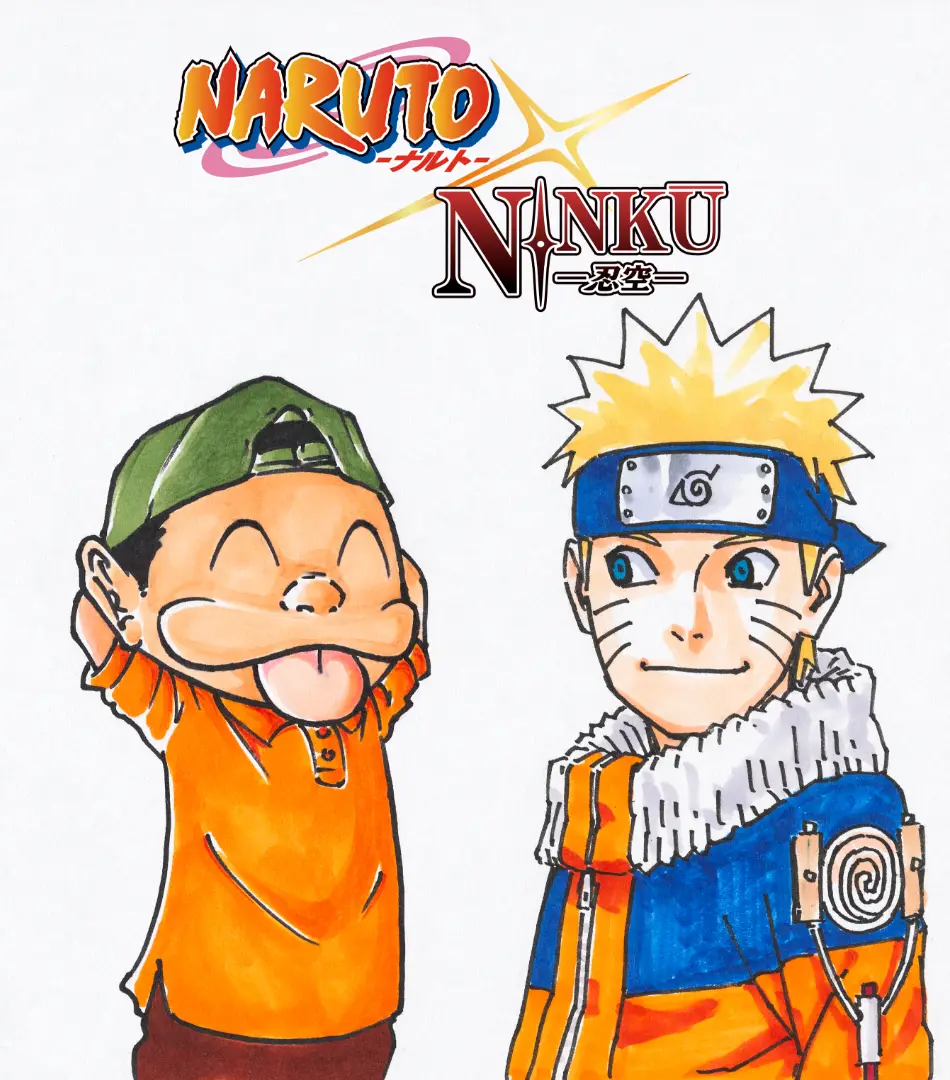
NINKŪ began running in Weekly Shonen Jump in 1993, long before Naruto became the world's best-known orange-clad ninja. Its anime followed in 1995. In the official material for the new project, Kishimoto says NINKŪ made him want to draw Naruto, describing its protagonist Fūsuke as a kind of hidden mentor. This is not a critic piecing together influences decades after the fact. It is the artist publicly describing what lit the initial spark.
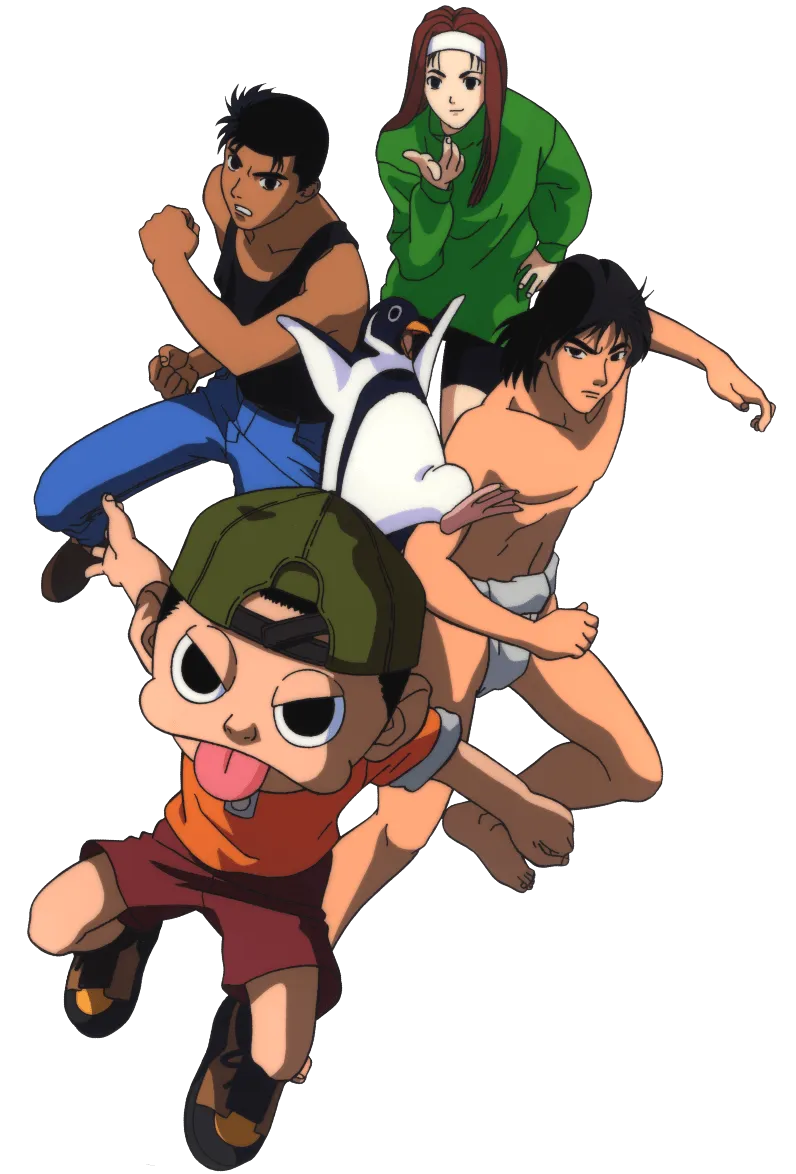
The story deliberately travels back to a younger Team 7. Kakashi assigns Naruto, Sasuke and Sakura a mission but cannot join them, leaving Naruto as acting leader. The trio gets lost in a different world and meets Fūsuke, a young fighter whose unusual appearance hides the discipline of the NINKŪ corps. The pairing works because Naruto's world borrows the visual language of ninja adventure while NINKŪ comes from an earlier, stranger branch of it.
A crossover can easily dissolve into a catalogue of references. The question is whether two systems of fighting, humor and friendship can share a story without either being reduced to a cameo. Four episodes give this project a beginning and an end, but they also leave little room for a long origin lesson. A newcomer needs only to understand Fūsuke as a character, not complete homework on a 1990s anime.
The people involved matter more than the logo
PIERROT FILMS is producing the animation, with Noriyuki Abe directing and Tetsuya Nishio on animation character design. Abe directed much of the original Naruto television franchise, while Nishio's work helped establish its recognizable animated look. The official cast includes Junko Takeuchi as Naruto, Noriaki Sugiyama as Sasuke, Chie Nakamura as Sakura and Rika Matsumoto as Fūsuke.
The music is another bridge between eras. FLOW is listed for the opening and ending songs, with “GO!!!” and “Viva Rock” among the titles on the official site. Bringing back music so closely associated with Naruto's earlier television years gives the production an immediate emotional address. It is also a reminder that this story is reaching people who grew up with the franchise, not only a new audience arriving through recent games.
The announcement arrived inside PROJECT RASENGAN, a wider plan spanning new animation, an original manga project, a trading card game and the international expansion of Naruto Mobile. None of those should be conflated with the four-episode crossover. The new Kishimoto manga, for example, has been teased separately; its full details were promised for Jump Festa 2027. The global mobile game expansion likewise has regional and language restrictions still to be announced.
What is confirmed and what is not
The official crossover website confirms four episodes, the central premise, staff and named cast members. It does not provide a reliable worldwide streaming schedule or a confirmed India release date. Even if a promotional page shows older anniversary language, the October 2026 announcement is the correct starting point for reporting this particular project. Readers should not mistake anniversary material for a newly verified broadcast calendar.
There is an interesting risk in using the old Team 7 here. Naruto's life eventually became sprawling: wars, family histories, inherited enemies, a new generation and an enormous mythology. Returning to a time when three children could get lost on a simple mission strips away that machinery. It gives the writers room to rediscover why their relationship worked in the first place: Sasuke's reserve, Sakura's frustration and Naruto's impulsive confidence.
NINKŪ has its own following, but this may be the first introduction for many Naruto fans. That puts pressure on the creators to make Fūsuke feel like a person rather than the answer to a trivia question. His place in Kishimoto's creative history is interesting; his place in the actual story must be earned through action and choices.
The most meaningful part of this announcement is not that two brand names have crossed paths. A successful manga artist has been given the chance to make an on-screen story with the work that pushed him toward the drawing desk. The wider commercial machinery around Naruto will keep turning either way. These four episodes have a smaller, more personal task: show fans what Naruto might look like when he finally meets an ancestor who was never part of his fictional family.