Mohamed Tarek was only 17 when he came within one final of becoming Clash Royale world champion. Four years later, the Egyptian player known as Mohamed Light had won the biggest individual title in the game three times. That is an extraordinary run in any esport. In a game where an eight-card deck, a tiny elixir mistake and one bad cycle can decide a match in seconds, it has made him the clearest modern contender for Clash Royale’s greatest-ever player.
The trophies tell only half the story. Light has also spent years treating the global ladder like another championship. He has occupied multiple top positions using separate accounts, kept winning through balance changes and built an audience watching him do the very thing most players struggle to sustain: make difficult decisions look routine. To understand why the GOAT label follows him, you have to look at the finals he lost, the finals he won and the rankings he returned to in between.
Mohamed Light — Career at a glance
- Full name
- Mohamed Tarek
- Country
- Egypt
- Born
- July 1, 2004
- CRL World Championships
- 2022, 2024 and 2025 (3)
- CRL World Finals runner-up
- 2021
- 2026 season
- Won CRL Monthly Finals Seasons 1, 2 and 4
- Historic ladder
- No. 1 on RoyaleAPI’s all-time player leaderboard in its October 2026 snapshot
- Tournament winnings
- Approximately $1.28 million on Liquipedia; trackers differ in coverage
2021: The runner-up finish that changed everything
Mo's (short for Mohamed Light) rise began well before the celebrations. At the 2021 Clash Royale League World Finals, the Egyptian reached the championship match against Japan’s Mugi and finished second. Esports Earnings records a $100,000 prize for that result. At that point, he had already demonstrated that he could get through a global field. What he had not yet done was close the final against a player who was equally comfortable under pressure.
That distinction matters. A strong ladder season can reward hundreds of matches and a high enough win rate. A world final gives you one opponent, a short series and little room to hide an error. Light’s 2021 defeat became a recurring reference point in the next season’s title run, not because it proved he lacked composure, but because it gave his future rivals and fans a clear measure of how much he had to overcome.
2022: From an opening defeat to his first world championship
His first world title in Helsinki was the opposite of a clean march through the bracket. Light opened the 2022 World Finals with a 2–0 loss to Japan’s KK and dropped into the lower bracket. Another defeat would have ended his tournament. Instead, he fought through a succession of elimination matches, beating Pandora, Sweep, Vitor75 and airsurfer before meeting the player who had taken the 2021 title from him.
Against Mugi in the lower-bracket semifinal, Mo won 2–0. He then beat Brazil’s Samuel Bassotto to reach Germany’s SK Morten, who had not yet lost a match. The Grand Final had a crucial double-elimination twist: Mo had to beat Morten twice. He took their opening series 2–1, resetting the bracket, before winning the deciding series 2–0. That distinction is central to what made the title run special. It was not one clean sweep but two different sets against the same elite opponent, with Morten given another opportunity to adjust. The result and format are recorded in the 2022 CRL World Finals bracket; Supercell’s Clash Fest recap confirmed Light as champion and the $250,000 winner.
One 2022 final sequence shows why players fear his next move

In the third game of the first Grand Final series against Morten, the match was still competitive when Morten committed a Giant Skeleton behind his King Tower. Mo answered with a Miner-and-Bats attack, forcing Morten to spend his Giant Snowball. Then came the change of pace: Light pressed with Skeleton King and Skeleton Army, exploiting the moment when Morten’s small-spell answer was no longer available. Skeletons reached the tower and turned a delicate position into a major damage swing. A contemporary game-by-game tournament recap documents this sequence; the same exchange is dissected in Boss_CR’s retrospective analysis.
The impressive part is not the cards themselves. It is the order. Mo knew the opponent had invested in a slow, expensive setup, tested the immediate answer with a smaller threat and committed harder once that response was gone. Morten still had defensive choices, but now he had to improvise under pressure rather than execute the push he had begun preparing. This is the kind of exchange that makes Clash Royale feel closer to a contest of information than a race to place troops. Mo did not need to attack constantly; he needed the right ten seconds.
That was only the first part of the story. Morten and Mo still had to play the bracket-reset final, where another series of difficult defenses ended with Mo taking the trophy. Watch the 2022 Grand Final coverage: the most revealing moments are the smaller responses before the tower damage, the spells removed from an opponent’s hand, and the times Mo decides an attack is not worth the elixir.
2023: Proof that even the best can have a difficult season
There was no third-place trophy waiting for him every year. In the 2023 CRL World Finals, Mo finished seventh–eighth, while Japan’s Mugi became champion again. That result makes the career more compelling than a simple unbeaten-champion story. Clash Royale changes constantly: card strengths shift, new mechanics enter the game and tournament opponents spend months preparing for the best-known players. Being the favorite does not remove the possibility of losing early.
Yet 2023 was also the year of one of Mo's most extraordinary ladder achievements. In July, he uploaded a video titled ‘I got 1 2 3 in the world’. Those top-three positions were held across accounts associated with the same player. It was not a claim to three different players’ identities; it was a demonstration that one person could maintain several elite leaderboard positions at once. For a game in which the final hours of a season can overturn weeks of climbing, that is almost as startling as a trophy.
2024: The return of the champion
In November 2024, Light arrived at Helsinki’s SuperFest as a contender again, this time under the Twisted Minds banner. His run was startlingly efficient. Clash Royale Esports reported that he dropped only one game across his campaign, and the concluding series against Ryley ended 2–0. With that victory, he became the first player to win the individual CRL World Finals twice. Supercell called him the ‘Greatest of All Time’ in its own event recap.
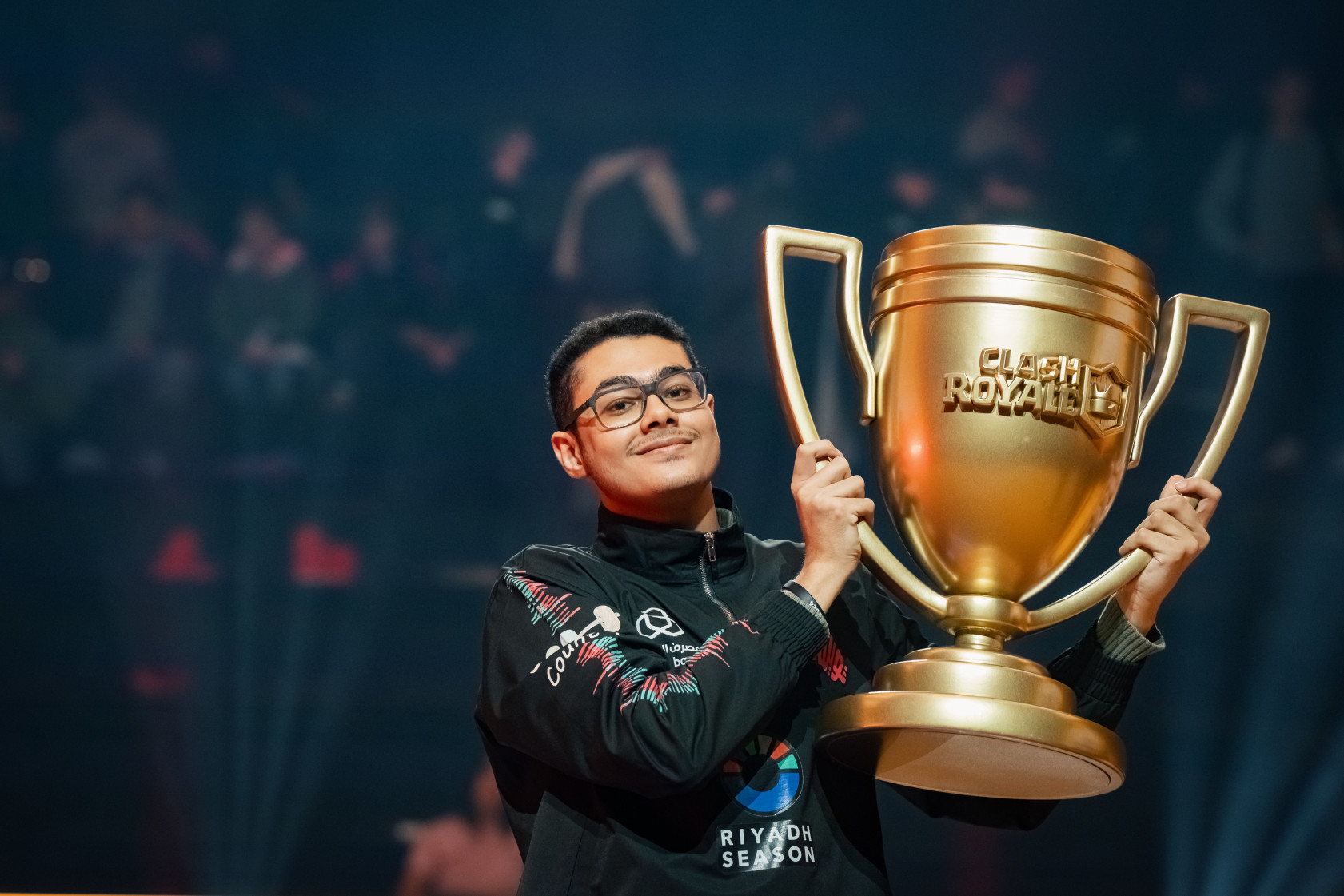
The title also showed what separates championship form from having one favored deck. The best players can learn a matchup and execute it. Repeat champions have to do that while other professionals actively study how to beat them. Mo's 2024 campaign, backed by strong monthly and community leaderboard performances, demonstrated the kind of sustained preparation that is difficult to capture in a single viral clip. He earned $200,000 from the World Finals.
2025: A third crown, and the GOAT debate changes
The argument became harder to contest in Atlanta on November 2, 2025. Mo defeated Brazil’s Pedro 3–1 in the upper-bracket final and then swept fellow Brazilian Sub 3–0 for his third world championship. The concluding match was not a dramatic reverse sweep; it was a decisive final delivered against another world-class contender. The official tournament schedule and results are recorded by Esports Charts. The championship brought another $200,000 first-place prize.

Three world titles in four seasons would be remarkable; three titles across 2022, 2024 and 2025, after a 2021 runner-up finish, is a competitive record built over multiple generations of the game. Mugi, Morten, Ryley, Pedro and Sub are not interchangeable opponents, and neither were the metas in which Mo faced them. That variety is precisely why the results matter.
Mohamed Light at the CRL World Finals
| Year | Finish | Final opponent / context | Recorded prize |
|---|---|---|---|
| 2021 | 🥈 Runner-up | Lost championship to Mugi | $100,000 |
| 2022 | 🥇 Champion | Beat Morten 2–1, then 2–0 after bracket reset | $250,000 |
| 2023 | 7th–8th | Early exit; Mugi won the title | $40,000 |
| 2024 | 🥇 Champion | Beat Ryley 2–0 in Helsinki | $200,000 |
| 2025 | 🥇 Champion | Beat Sub 3–0 in Atlanta | $200,000 |
The ladder record is where his dominance becomes difficult to explain away
World Finals are played over a few days. The ranked ladder is an entirely different examination: countless opponents, repeated meta shifts, and a season-ending scramble in which every match matters. RoyaleAPI’s historical player leaderboard aggregates top-ten season finishes across linked player identities rather than treating every account as a separate competitor. In its October 2026 snapshot, Light stands first with 1,082 leaderboard-history points and 72 counted top-ten account finishes. The next player listed, Wero, has 493 points which is less than half Light’s total.
The multi-account part is essential, not a footnote. A player can appear more than once in the same final leaderboard when several of their accounts land in the top ten. Light’s celebrated No. 1, No. 2 and No. 3 achievement in 2023 was a striking early example. It did not mean three different seasons: it meant simultaneous ranked placements controlled by the same player. In August 2026’s season-end data, the pattern continued, with accounts credited to Mo finishing No. 1 on 4,121 medals and No. 5 on 4,062.
The two August accounts also used the same Graveyard-and-Poison foundation, with Evolved Archers, Goblinstein and Evolved Skeletons. That matters because it rules out the easy explanation that he simply found one lucky matchup in one queue. Maintaining two such high placements with comparable decks requires repeated execution at a level where opponents understand the same cycle interactions and punish the smallest misplacement.
Documented multiple-account ladder achievements
| Period | Ranked achievement | Source / context |
|---|---|---|
| July 2023 | No. 1, No. 2 and No. 3 | Mo's own published video showing his multi-account push |
| 2024 | February, March and April No. 1 finishes | RoyaleAPI’s year-end leaderboard recap |
| August 2026 | No. 1 (4,121) and No. 5 (4,062) | SQURS season-end ranked analysis |
| October 2026 snapshot | No. 1 all-time; 1,082 points; 72 top-ten account finishes | RoyaleAPI historical player leaderboard |
How Mohamed Light plays differently — and why it works
A casual viewer remembers the finishing push. Another top player notices the 20 seconds before it: which card was just played, what Morten or Mugi is likely to have in hand, and whether the opponent can afford to answer another threat. In an earlier tactical breakdown, Clash Royale creator Boss_CR describes Light’s versatility, damage control, mid-game adjustments and practice habits. It is valuable expert commentary, not proof that Mo never misplays or somehow knows his opponent’s thoughts.
Unpredictable decks, consistent decisions
Mo was associated early in his career with fast, precise Miner and cycle strategies, but his tournament success would have been far narrower if he had stayed within that comfort zone. A double-elimination Duel bracket demands more than one reliable list. In Helsinki in 2022 he won games with heavy and defensive approaches as well as cycle-based ones; at one point he took a game from Mugi using Golem, then switched to Mortar–Miner. The 2022 match-by-match deck record makes the contrast clear. Preparation against him is difficult precisely because knowing his favorite style does not tell an opponent what he will choose next.
That flexibility has continued to show up on the ladder. RoyaleAPI’s 2024 recap records No. 1 finishes with Hog 2.6, Goblin Drill and Miner Poison in successive months. Those are not identical game plans: one rewards quick cycle and repeated reads, another can attack from unexpected angles, and the third often wins by exhausting answers over time. What remains consistent is the calculation behind the card choice.
A damage lead changes his priorities
A common ladder mistake is to mistake an advantage for permission to overextend. Take a tower, then immediately pour more elixir across the bridge and suddenly a match that was under control becomes a frantic defense against a counterpush. Mo is difficult to chase because he often does the opposite. If the tower-health situation favors him, he can shorten the game strategically: defend efficiently, keep enough elixir for the next threat and make the opponent manufacture the comeback. There is no need for a spectacular three-crown finish when a clean one-crown win is already available.
He also understands that tower damage is sometimes a resource worth spending. A small hit can be acceptable if preventing it would destroy the elixir balance needed for the next exchange. The judgment changes with the matchup, clock and remaining health, which is why this is not a simple rule about always playing passively. The important skill is recognizing which damage genuinely threatens the result and which merely looks frightening.
Reading the player, not just the deck
At the start of a match, good players identify a deck archetype. Mo can go further by testing how the particular opponent uses it. Do they defend a Miner immediately or wait for support? Will they cycle a heavy card as soon as they reach full elixir? Do they hold a small spell or spend it on the first threat? The answers shape later attacks. An early exchange that produces little tower damage may still be valuable because it exposes a pattern in card rotation or elixir spending.
The Morten sequence is an example of pressure built from information, not a random gamble. First, an opponent spends on a slow commitment. Next, Light forces a response. Then he attacks where the remaining answers are weakest. This is why one decisive push can be more damaging than five routine attempts: it arrives after the opponent has already revealed what is missing.
The rematch matters as much as the result
Boss_CR recalls a practice session in which he brought a heavily favorable matchup against Light and won. Instead of moving on, Mo asked to play it again. After another loss, he asked for one more, making adjustments that narrowed the gap each time. The account comes from Boss’s own retrospective, it captures something worth considering: a bad matchup becomes more useful when treated as a problem to investigate than as an excuse to stop trying.

That approach is more useful than the exaggerated idea that Mo plays perfectly. He has lost major matches, including the 2021 world final and his opening set in 2023. His edge is not immunity from defeat; it is the willingness to rethink how a defeat happened and return with a better plan.
What happens away from the arena
Mo's success should not be explained as the work of one mind in isolation. In an on-site interview after his 2023 opening loss, Light said he discussed his first deck selections with his coach, Jesus, and adjusted his choices for the next set. That is rare direct evidence of how analytical preparation enters his tournament play. High-level Clash Royale involves studying likely deck selections, avoiding disastrous matchups and preparing alternative plans before the set begins. The coach cannot place the cards for him, but can help determine which problems he will face.
The combination is what gives the gameplay its signature shape: broad preparation before the match, fast recognition during it and restraint after the advantage is secured. He is not always the most aggressive player on the screen. Quite often, he is the one who has made the other player run out of comfortable options.
His YouTube and Twitch career made elite ladder play watchable
Mohamed Light’s name now reaches well beyond esports brackets. His verified YouTube channel has grown to roughly 465,000 subscribers in September 2026 third-party tracking. The channel’s most successful uploads tell you why: the multi-account ‘1 2 3’ push, ranked challenges, deck tutorials and long-form gameplay turn individual decisions into stories. His videos are not simply compilations of tournament clips; they invite viewers to see how an elite player solves the game on ordinary days.
On Twitch, under mohamedlightcr, he streams ladder pushes, end-of-season battles and sessions with other high-ranked players. TwitchMetrics reported roughly 172,000 followers in late October 2026 and documented several multi-hour streams around the September and October season ends.
How much prize money has Mohamed Light actually won?
There is a clear answer and an important caveat. Liquipedia’s player profile lists approximately $1.28 million in tournament winnings, including his three world titles and other competitions. Esports Earnings displays $960,808 from 49 tournaments, but its itemized profile stops with the 2024 period and therefore does not reflect his complete later results. They use different coverage and refresh schedules. The figure is not his net worth, streaming revenue or sponsorship income.
The four largest results already explain most of his early career total: $100,000 for the 2021 runner-up finish, $250,000 for the 2022 championship, and $200,000 each for the 2024 and 2025 titles. Add substantial wins in other events, including 2025’s creator tournaments, and the scale of the achievement becomes obvious. Few competitive mobile-game careers produce both the trophies and the same kind of sustained prize earnings.
2026: The champion is still setting the pace
The story is not finished. In 2026, Mo won three of the five CRL monthly finals — Seasons 1, 2 and 4 — while continuing to lead long-term leaderboard discussions. He took the opening season over SandBox by 3–2, beat Pedro 3–0 in Season 2 and defeated Clown 3–1 in Season 4. Those are useful results because they show the title-winning edge surviving yet another competitive season rather than stopping at a 2025 celebration.
His next major target is the 2026 CRL World Finals in Shanghai, scheduled for November 6–8. At the time of this October 26 profile, that event has not yet taken place. A fourth title would extend a record that already looks difficult to match. But even if he does not win, the breadth of his résumé makes the question worth asking: who else has combined this many global finals, such long-lived ladder dominance and this many separate years at the top?

So, is Mohamed Light the Clash Royale GOAT?
There are legitimate arguments for other legends. Mugi won the individual World Finals in 2021 and 2023. Morten has remained one of the scene’s enduring high-level rivals. The early team-based era of CRL also produced champions whose accomplishments cannot be compared mechanically to today’s individual brackets. ‘GOAT’ is ultimately a judgment, not an official statistical category.
The signature of a great Clash Royale player is not winning every match. It is making correct decisions often enough that years of uncertainty still produce a recognisable pattern. With Mohamed Light, that pattern now stretches from a teenage runner-up finish to three world championships and another season spent at the front. That is why the GOAT argument is no longer just fan enthusiasm. It is written across the results. So yes, Mohamed Light is the GOAT of Clash Royale and perhaps the GOAT of Mobile Gaming Esports as well.
The best way to learn from Mohamed Light is to review an entire exchange, not only the winning push. In one replay, track the opponent’s small spell and the four-card rotation around it; in another, note the moment a tower lead changes what risks are worthwhile. Then try the same matchup again with a different defensive choice. Find practice partners on BytePlay if you want someone to test those reads against. Admiring three world titles is easy; learning the decisions that helped produce them takes deliberate repetition. See you in the arena!