

John Romero has a publisher again. That should have been the simple good news for a studio that nearly lost its future when funding for an unannounced shooter disappeared. Instead, the number that sticks is sixteen. Romero Games once had 110 people building that game. Now roughly 15 or 16 are working on a redesigned version of it.
Romero confirmed the new deal in an interview with Video Games Chronicle at Gamescom Asia on October 30. The Doom and Quake co-creator says the studio owns the intellectual property and the work already produced. Its new publisher, whose identity remains undisclosed, is backing a much smaller shooter without dictating its creative direction. There is no title, platform list or release date to announce yet.
From 110 developers to five
When the previous publishing arrangement collapsed, Romero Games tried to keep its workforce together while searching for another backer. That could not continue indefinitely. The studio went from 110 employees to a core of five before rehiring around ten former team leads. The company is operating at a fraction of its old size.
The distinction matters because a new publishing deal does not reverse the layoffs. A surviving project and a recovered workforce are two different things. Romero has found the first; the second remains a much harder story for the developers who left. The studio has not announced plans to restore its original headcount.
Funding was withdrawn from the earlier project amid Microsoft's wider games-business cuts. At the time, reports that Romero Games itself was closing spread quickly. The studio disputed that it had shut down, and its latest confirmation shows that the company did keep operating. Still, the work being made today is no longer the 110-person production initially envisaged.
Not the cancelled game with a smaller team
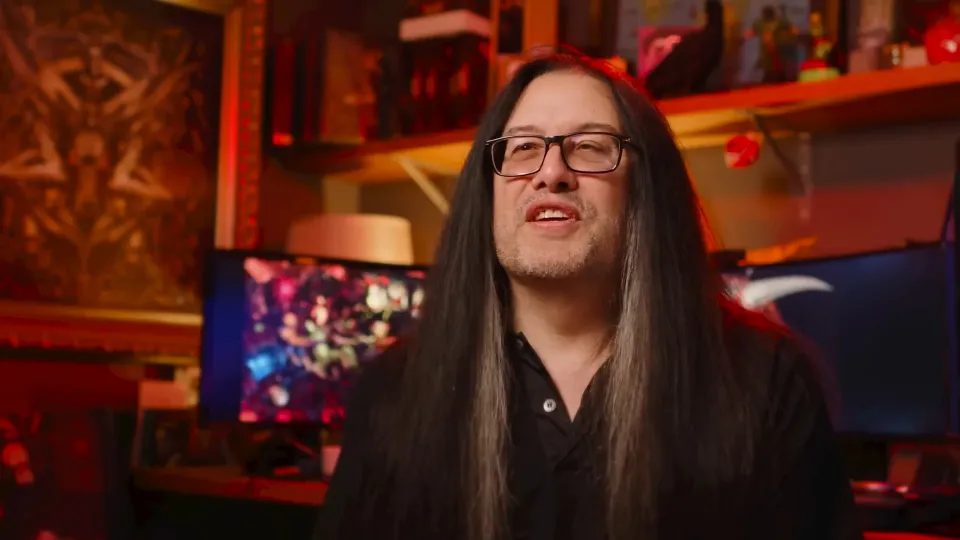
Romero describes the current project as a complete redesign. The studio is reusing useful material, including art, weapons and code, but it is not trying to finish the old project on a drastically reduced budget. That distinction is easy to miss in headlines about a rescued shooter.
For a large first-person shooter, the difference is not simply the number of environments or missions. A smaller team changes what can be built, tested, animated and supported at the same time. Romero says he redesigned the game around the people available rather than asking those people to sustain a project created for a much bigger operation.
The broad genre remains the same: a shooter. Everything else is largely undisclosed. There is no reason yet to call it a Doom successor, a spiritual reboot or the same game that Microsoft had previously backed.
The freedom of a small studio has a cost
Romero has spoken positively about returning to hands-on development. He says the current publisher is content to let the studio make its own creative decisions, and the smaller team lets him work directly in Unreal Editor instead of spending his days in production meetings.
That sounds attractive to anyone who has watched a promising game become buried under approvals and management layers. But it is also a description of a studio learning to survive a setback. Creative independence is valuable. It should not make the reduction from 110 employees to roughly sixteen sound like an uncomplicated success.
There is an interesting tension here. The same commercial system that can finance a large, ambitious shooter can also remove its foundation almost overnight. A small independent team can turn faster and retain more control, but it has less room for expensive mistakes, delayed milestones and large-scale production demands.
What comes next?
The next meaningful announcement is not another reassurance that the game exists. It is a proper reveal: what players will do, where it will launch, who is publishing it and whether the new scope produces something worth playing. None of those details has been confirmed.
Romero Games is alive. The shooter is still being developed. That is a substantial recovery from the uncertainty around the studio. But the story is not just that John Romero found another publisher. It is that a famous game maker had to build an entirely different future from what was left of the previous one.
