Asia is about to host three major esports tournaments in 17 days. Not three editions of the same game, either. Rainbow Six Siege goes to Osaka, Counter-Strike 2 heads to Hong Kong, and Brawl Stars finishes the run in Tokyo. Behind all three is BLAST, an organiser making a much bigger play for Asian audiences.
The plan was detailed in a Forbes interview with BLAST in August. With October ending and the events just days away, it is no longer a distant expansion promise. The teams, venues and prize pools are taking shape, and the organiser is already booking Asian cities for 2027.
Three cities, three games, $2.6 million
The calendar starts on November 6 with the BLAST R6 Major Osaka. Ubisoft has confirmed a $600,000 prize pool, 20 teams and a November 13–15 arena playoff at ATC Hall. The competition is also one of the last opportunities to collect points toward Six Invitational 2027 in Brazil.
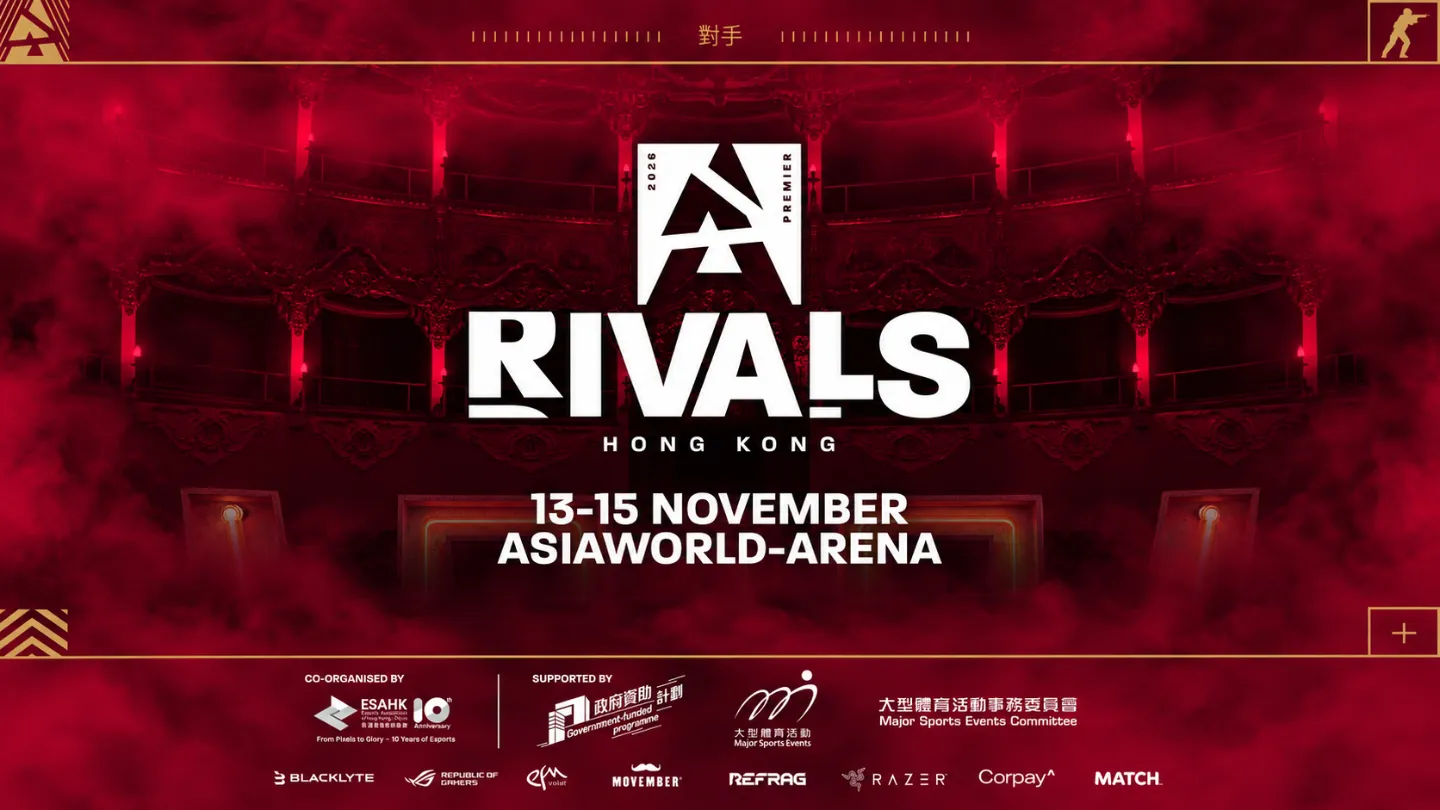
Counter-Strike follows from November 11–15 at BLAST Premier Rivals Hong Kong. Eight teams will share $1 million. The crowd comes into AsiaWorld-Arena on November 13–15, after the group stage has already begun.
Then Supercell's Brawl Stars World Finals move to Tokyo Metropolitan Gymnasium from November 20–22. Twelve teams will fight for another $1 million. Its dates place the last day of this Asian run 17 calendar days after the opening of the Osaka tournament.
Put together, those events carry a combined $2.6 million in prize money. But the money is only one part of BLAST's calculation. Each event has a different publisher, community and potential host-city partner. That's much more durable than bringing one game to a new market and leaving.

Hong Kong already has a proper title race
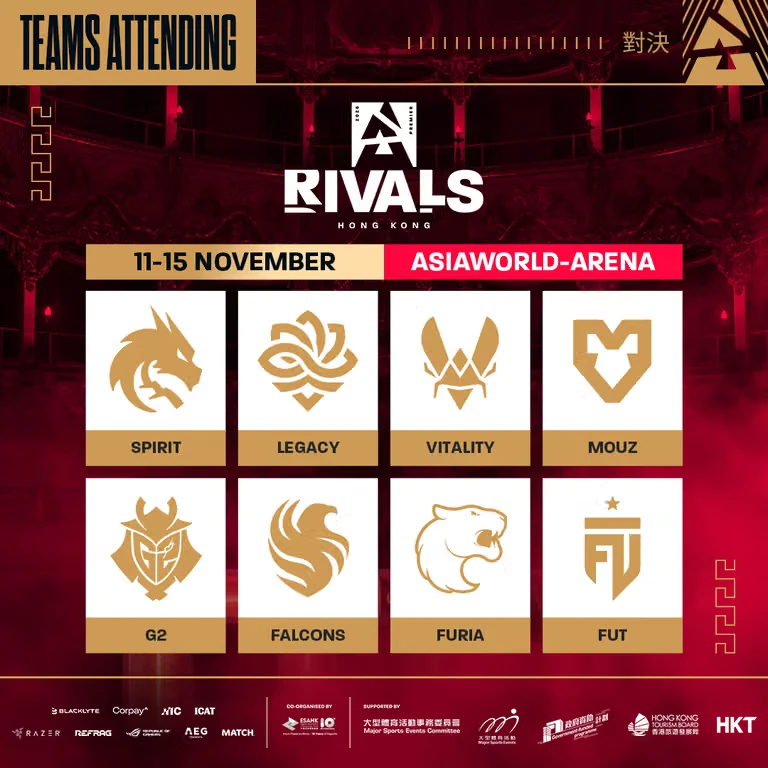
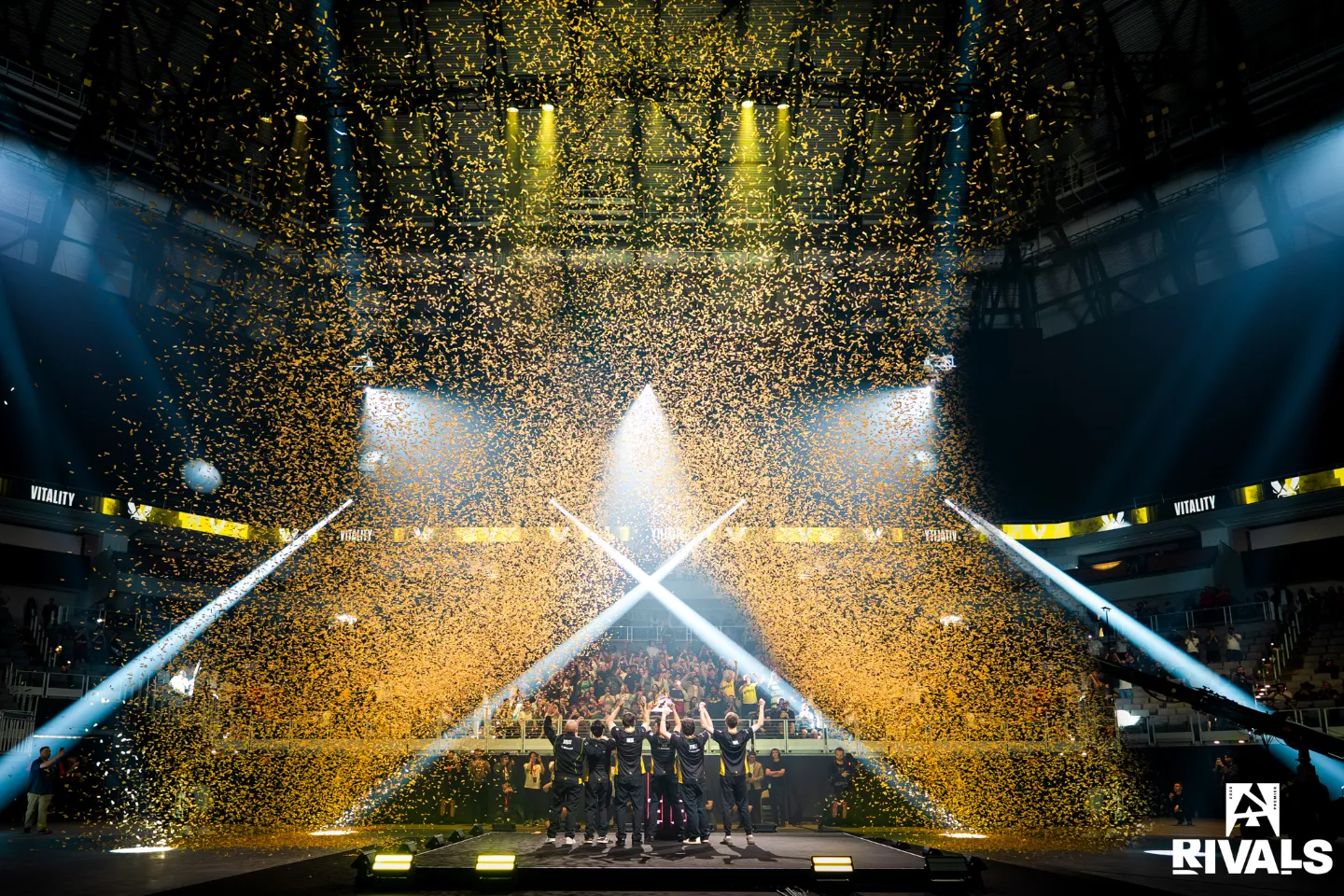
BLAST revealed the eight Rivals teams on October 16: Spirit, Legacy, Vitality, MOUZ, G2, Falcons, FURIA and FUT Esports. FURIA return as the defending champions after beating Falcons 3–1 in last year's final. That makes a potential rematch one of the easiest storylines for fans to follow.
The opening day is more immediate. BLAST's bracket lists Legacy against FURIA, Vitality against Falcons, Spirit against FUT and MOUZ against G2. The matches begin November 11, ahead of the arena weekend. For Indian viewers, the event offers daytime-to-evening viewing rather than the late-night hours common with North American tournaments.
Hong Kong is also where BLAST can point to evidence of local demand. The organiser says last year's edition drew more than 30,000 arena attendances, 36 million hours watched and over HK$600 million in economic impact. Those are BLAST's reported figures, not independently audited numbers, and they should be treated that way.
Why publishers are buying into Asia
Ubisoft's Rainbow Six event and Supercell's Brawl Stars championship put global tournaments in markets with active gaming audiences that have not always hosted the biggest international finals. Japan is particularly important here. One weekend is for the tactical, PC-focused Siege scene; the next brings a mobile-game audience into a Tokyo arena.
For publishers, these events do more than produce a winner. They put the game in front of local sponsors, media, creators and potential players. For the host cities, international fans book hotels, eat out and spend money outside the venue. Those are plausible benefits, though the exact public return needs transparent measurement rather than just a promotional headline.

What changes for India?
India is not hosting any of these three events. That does not make the story irrelevant. Indian esports audiences already follow CS2, Siege and Brawl Stars, and tournaments played in nearby Asian time zones are easier to watch live than many events held in Europe or the Americas.
There is also a business question for Indian organisers and city partners. Can an Indian venue eventually attract a publisher-led event with repeat dates, dependable infrastructure and an audience beyond one local game? BLAST's Asian programme shows what the sales pitch looks like: local partnerships, tourism impact and a returning international calendar.
BLAST has already listed an Open in Singapore for March 2027 and another in Ulaanbaatar, Mongolia, in May. Those future events are more revealing than a one-off November festival. The organiser is looking for a regular circuit, and Asian cities are competing to become part of it.

The real test arrives after November
A packed arena is valuable, but it does not automatically mean a sustainable esports economy. Teams need a strong calendar; publishers need viewers and engagement; local governments need credible evidence that public support pays off. Every stakeholder will judge these events differently.
The coming weeks will tell us which crowds BLAST can attract outside its established CS2 audience. The bigger answer may come in 2027: whether Osaka, Hong Kong and Tokyo turn into lasting stops, and whether more of Asia, India included, can make the same case.